Oaxaca Beyond the Center: Barrios and Day Trips Worth Taking
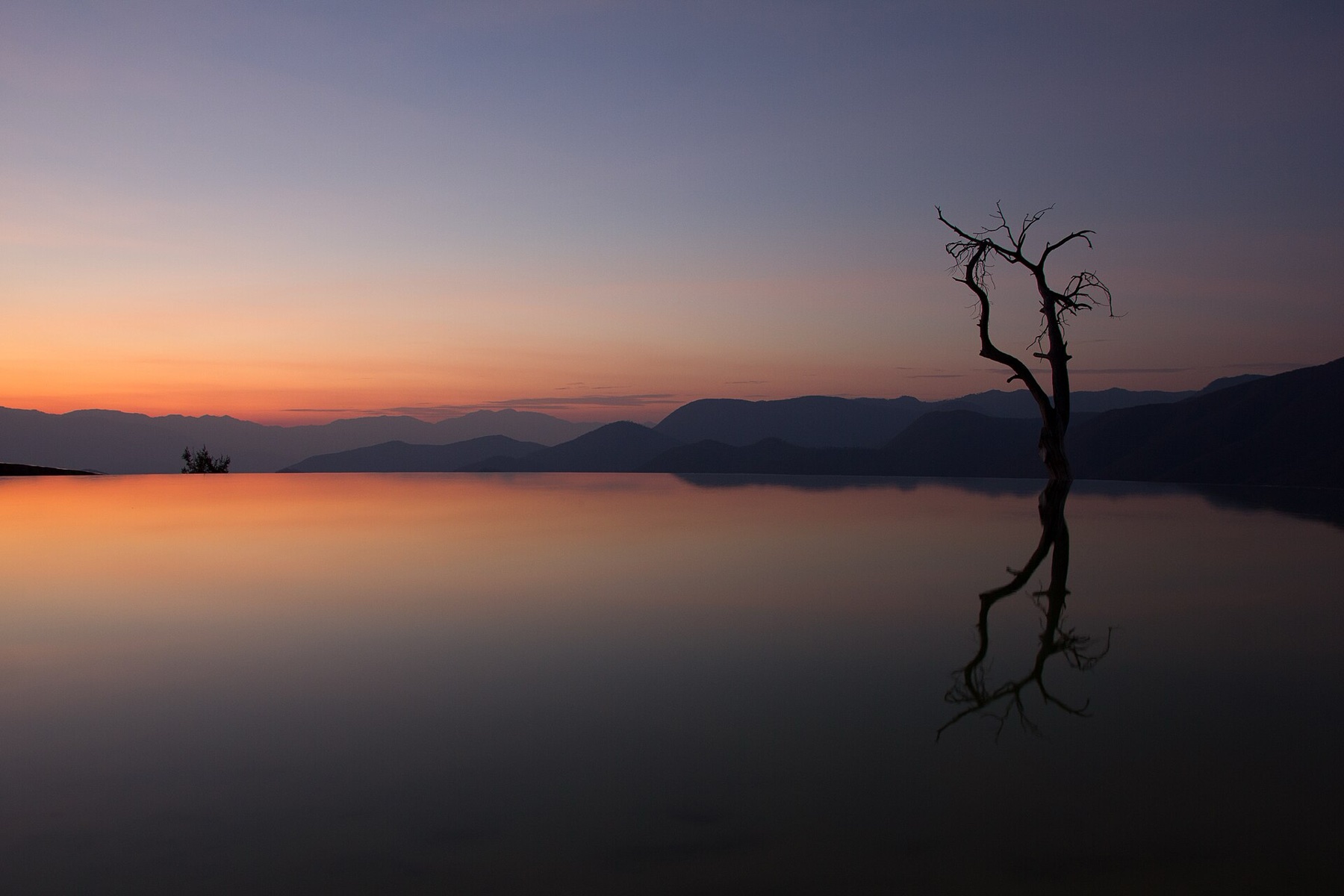
The short answer: within walking distance of the center, go to Jalatlaco for murals and small cafes and to Xochimilco for its colonial aqueduct, weaving workshops and home-style Oaxacan cooking. For food, go to Reforma. For day trips, it depends on what you love: Teotitlán del Valle for rugs and natural dyes, San Bartolo Coyotepec for black pottery, Mitla for Zapotec stonework, and Hierve el Agua for mineral pools on a cliff edge. Plan those last two together, and leave Teotitlán for a Sunday with the Tlacolula market. One warning: Hierve el Agua has a long history of closures, so check it's open the day before you go.
If you're visiting for the festival, our guide to Day of the Dead in Oaxaca covers the cemeteries and where to stay that week. Prices below were checked on November 5, 2026, when 100 pesos was worth about US$5.40.
Which Oaxaca neighborhoods are worth exploring beyond the center?
Short answer: Jalatlaco for wandering, Xochimilco for history and textiles, Reforma for eating. You can walk to the first two.
- Jalatlaco. About a 10-minute walk northeast of Santo Domingo, this is the barrio for street art, with its best-known murals on Aldama, 5 de Mayo and Miguel Hidalgo. Look for the Day of the Dead-inspired work by the Oaxacan artist Bouler. Its cobbled streets are quiet enough to feel like a village. Stop for coffee at Cocuche Café or Mujer de Café, eat at Santa Hierba, and browse used vinyl and books at Dantana Rock. The main park has hosted a crafts market on weekends.
- Xochimilco. Not the Mexico City one. This barrio dates back to the 15th century and has long been a weaving district, with old textile workshops and small craft shops on its cobbled streets north of Highway 190. South of the highway, the arches of an aqueduct built between 1727 and 1751 run along Callejón Rufino Tamayo. The water stopped in 1940, and some arches now serve as entryways to homes. If you love 2006 comedies, you may recognize it from Nacho Libre. Have lunch at Ancestral Cocina Tradicional, at José López Alavez 1347, a tree-shaded spot on the Michelin Guide's list.
- Reforma. It has few sights, but this middle-class neighborhood is where you go if the food is the reason for your trip. Itanoní, at Belisario Domínguez 513 and also listed by Michelin, builds its menu around tetelas, memelitas and other corn dishes. La Teca, at Violetas 200-A, is a tiny room serving dishes from the Isthmus such as garnachas, and one guide advises booking by phone the day before.
- San Agustín Etla. It's outside the city, about 11 miles northwest, but it works as a half day if you want green hills and contemporary art. The draw is the Centro de las Artes de San Agustín, a former textile factory that the artist Francisco Toledo turned into an arts center in 2006. We couldn't confirm its current hours, so check before you go.
Which nearby towns are worth a day trip?
Short answer: choose by interest rather than trying to see them all. Distances are short, but the villages lie in different directions.
| Place | Go for | From Oaxaca | Without a tour | Best timing |
|---|---|---|---|---|
| Santa María del Tule | A giant, ancient cypress | About 9 km east | Any colectivo toward Mitla | On the way east |
| Teotitlán del Valle | Rugs, natural dyes | About 30 km east | Colectivo, about 40 to 45 minutes | Tuesday to Sunday, when museums open |
| Tlacolula | Huge market, barbacoa | About 30 km east | Bus or colectivo, up to an hour | Sundays only |
| San Bartolo Coyotepec | Black pottery | About 12 km south | Colectivo, about 20 minutes | Before 10am or after 2pm |
| Mitla | Zapotec stonework | About 46 km east | Bus or colectivo, about an hour | Open daily |
| Hierve el Agua | Mineral pools, cliffs | About 70 km east | Bus plus shared truck, about 2 hours | Arrive early |
Is Teotitlán del Valle worth the trip?
Short answer: yes, if you care about textiles or want to buy a rug from the people who wove it.
This is a Zapotec town where around 150 families are known for weaving, and where children often start learning at 8 to 10. Traditional reds come from cochineal, an insect that lives on nopal cactus, while nut shells and pomegranates supply other colors.
- Skip the highway. A local weaver told Mexico News Daily that stores at the highway entrance charge more because they work with tour guides, and that rugs are cheaper farther into town.
- See dyeing up close. El Huizache, at Ignacio Allende 27, is a studio where natural dyes are made and taught. Bii Daüü, a weavers' group formed in 2004, is described by a craft fair that sells its work as using only natural dyes.
- Ask about the dye. Don't assume a rug from Teotitlán is naturally dyed. Oaxaca Culture, a long-running textile blog, wrote that even the respected women's cooperative Vida Nueva wove most rugs with synthetic colors because most buyers wouldn't pay for natural ones. Natural dye costs more, and a good weaver will tell you which you're getting.
- Museum and church. The Balaa Xtee Guech Gulal community museum on the main square holds archaeological pieces and weaving tools. The Preciosa Sangre de Cristo church was built over a Zapotec temple, and the remains are right behind it.
- Lunch. Tlamanalli, at Juárez 39, serves Zapotec cooking by Abigail Mendoza. A local listing says it's open Tuesday to Sunday from 1pm to 4pm by reservation only. That listing is undated, so call first.
What can you see in San Bartolo Coyotepec?
Short answer: barro negro, the glossy black pottery that a local potter made famous, in a short trip that also fits a half day.
For generations, the pottery here had a gray, matte finish. In the 1950s, Doña Rosa Real developed the polishing method that gives it a shine without paint. She died in 1980, and her family still runs the Taller de Doña Rosa at Juárez 24, with demonstrations of the process. One guide says tour buses tend to arrive between 10am and 1pm, so go earlier or later.
On the south side of the main plaza, the Museo Estatal de Arte Popular de Oaxaca has a collection that's mostly barro negro, plus prizewinning ceramics and woodwork. It asked for an optional 30-peso donation on a January 2025 tour. We couldn't find official hours, so check ahead.
If you have a full day, continue south. San Martín Tilcajete is the town for alebrijes, the painted wooden creatures, including the large workshop of Jacobo and María Ángeles. Santo Tomás Jalieza is known for backstrap loom weaving, and Ocotlán's market runs on Fridays. These are easier by taxi or on a tour.
Is Mitla worth the trip?
Short answer: yes, if you love architecture and detail. It's smaller than Monte Albán, but its stonework is the reason to go.
Mitla's walls are covered in mosaic fretwork made of finely cut stone, fitted into geometric panels. Head for the Group of the Columns, in the center of the site, where six huge monolithic columns once supported a roof, and where Quadrangle D is heavily decorated inside and out.
The national heritage institute, INAH, lists the site as open daily from 8am to 5pm, with last entry at 4:30pm. Entry is 210 pesos for foreign visitors (about US$11) and 105 for Mexican nationals, with tickets also sold online. Some older guides list shorter hours or a Monday closure, so INAH's page is the one to trust.
Is Hierve el Agua open, and how do you get there?
Short answer: a guide updated in October 2026 lists it as open daily from 7am to 5pm, but closures have happened, so confirm the day before.
Hierve el Agua is a set of mineral pools and petrified "waterfalls" of pale rock, about 70 km from Oaxaca. The name means "the water boils," but the water is actually chilly. Community landowners shut it to visitors in March 2021 in a dispute over who benefits from its revenue. A recent guide notes that it has been closed for months over community disputes, and that blockades and landslides have also affected access. Ask your hotel or a tour operator before you leave.
- Cost. Along Dusty Roads lists 50 pesos entry plus a 20-peso community road toll, and Where Goes Rose gives 70 pesos in its 2026 update. Showers and toilets cost a little extra. Bring cash, because the site doesn't take cards.
- By public transport. Take a bus to Mitla (about an hour, 25 to 30 pesos), then a shared pickup truck to the entrance (about 40 minutes, about 75 pesos). The last truck back was reported at around 5pm, but confirm with your driver. Expect around two hours each way.
- By car or tour. It's about 1.5 hours by car. Tours start from about US$35, but most give you only about two hours at the site and combine it with several other stops.
- What to do. There are two main pools, one of which feels like an infinity pool at the cliff edge, plus a 3.1 km loop hike of about an hour that shows the rock formations from below. Allow three to four hours if you want to do both. Signs ask you not to wear sunscreen or bug spray in the springs, and the rock can be slippery.
How do you reach these towns without a tour?
Short answer: colectivos, the shared taxis and vans that leave when full, mostly from around the Central de Abastos market.
Fares are low, roughly 10 to 35 pesos depending on the route, though sources disagree, so ask before you get in. Destinations are usually marked on the vehicle, and each serves particular villages. For Teotitlán, Tlacolula and Mitla, look for vehicles heading east on Highway 190, from the Abastos area or the nearby second-class bus station. One travel guide advises against going to that station before daylight or arriving after dark. For San Bartolo, colectivos leave from the south side of Abastos. Uber can get you to some villages, but you may need a taxi to get back.
How should you group these trips?
Short answer: by direction and by market day.
- Half day in the city: coffee and murals in Jalatlaco, then the arches and lunch at Ancestral in Xochimilco.
- Sunday, east: the Tule tree, then Teotitlán, then the Tlacolula market for barbacoa de chivo and tejate. Buses and colectivos have run between Teotitlán and the market on Sundays.
- Another day, east: Hierve el Agua first thing, then Mitla on the way back.
- Friday, south: San Bartolo, Tilcajete and the Ocotlán market.
If you're coming from the capital, our Mexico City guide and our Zona Maco art week guide with its Oaxaca add-on help you plan both ends of the trip.
FAQ
Is Hierve el Agua open in 2026?
Guides updated in 2026 describe it as open, and one lists daily hours of 7am to 5pm. It has closed before because of community disputes, so confirm locally the day before you go.
Can you do Mitla and Hierve el Agua in one day?
Yes. They're about 21 km apart, and Mitla is where public transport changes for the truck. Leave early, since you'll want three to four hours at the pools if you plan to swim and hike.
Do you need a tour for day trips from Oaxaca?
No, but tours are simpler for far-flung or multi-stop days. Choose a tour if you're short on time and a colectivo or driver if you want longer in each place.
What days are the markets near Oaxaca?
Tlacolula is on Sunday, Ocotlán on Friday, Zaachila on Thursday and Etla on Wednesday. Go early for the fullest experience.
When is the best time to visit Hierve el Agua?
Early in the day, before the pools get crowded. One guide recommends late October to early April, and says May to September is very hot.
Sources
- Lonely Planet, Oaxaca's neighborhoods (April 2022): https://www.lonelyplanet.com/articles/best-neighborhoods-in-oaxaca
- Bucket List Bri, guide to Jalatlaco (updated March 2026): https://bucketlistbri.com/jalatlaco-oaxaca/
- Food and Pleasure, Jalatlaco (June 2023): https://foodandpleasure.com/barrio-pintoresco-oaxaca/
- Michelin Guide, Ancestral Cocina Tradicional: https://guide.michelin.com/vn/en/oaxaca/oaxaca-de-juarez_2056768/restaurant/ancestral-cocina-tradicional
- Pearl, Ancestral Cocina Tradicional address and awards: https://joinpearl.co/restaurants/oaxaca/ancestral-cocina-tradicional
- Michelin Guide, Itanoní: https://guide.michelin.com/pt/pt_PT/oaxaca/oaxaca-de-juarez_2056768/restaurant/itanoni
- TableJourney, Reforma restaurants, including La Teca: https://tablejourney.com/neighborhood/oaxaca/reforma/
- TableJourney, food day trips from Oaxaca: https://tablejourney.com/mexico/oaxaca/day-trips-food/
- Excélsior, Centro de las Artes de San Agustín at 20 years: https://www.excelsior.com.mx/cultura/mutualidad-reune-45-artistas-20-anos-casa
- Wikipedia, Árbol del Tule: https://en.wikipedia.org/wiki/%C3%81rbol_del_Tule
- Mexico News Daily, weaving in Teotitlán del Valle (May 2022): https://mexiconewsdaily.com/mexicolife/zapotec-pueblo-weaving-a-gift-from-ancestors
- Qué Pasa Oaxaca, Teotitlán del Valle (April 2024): https://www.quepasaoaxaca.com/teotitlan-del-valle-where-the-soul-of-people-weaves-the-soul-of-the-world/
- Feria de Maestros, Bii Daüü: https://feriamaestros.com/pages/pprofilemarianososabiidauu
- Oaxaca Culture, Teotitlán cooperatives: https://oaxacaculture.com/tag/cooperatives
- Zona Turística, Tlamanalli: https://www.zonaturistica.com/restaurantes/oaxaca/teotitlan-del-valle/tlamanalli
- Wikipedia, San Bartolo Coyotepec: https://en.wikipedia.org/wiki/San_Bartolo_Coyotepec
- Wikipedia, Museo Estatal de Arte Popular de Oaxaca: https://en.wikipedia.org/wiki/Museo_Estatal_de_Arte_Popular_de_Oaxaca
- Oaxaca Autentico, San Bartolo black pottery guide (August 2026): https://oaxaca-autentico.pages.dev/en/blog/black-pottery-san-bartolo-coyotepec-guide
- Oaxaca Autentico, day trips from Oaxaca City (August 2026): https://oaxaca-autentico.pages.dev/en/blog/best-day-trips-from-oaxaca-city
- Oaxaca Lending Library, MEAPO and Doña Rosa tour (January 2025): https://www.oaxlibrary.org/event-details/tour-black-pottery-and-meapo-youth-of-excellence-special-exhibition
- Oaxaca Lending Library, Tilcajete and Jalieza tour: https://www.oaxlibrary.org/event-details/tour-talent-in-tilcajete-san-antonino-2
- INAH, Mitla: https://lugares.inah.gob.mx/en/node/4350
- Food and Pleasure, Mitla and distance to Hierve el Agua (December 2024): https://foodandpleasure.com/pueblo-magico-de-mitla/
- Along Dusty Roads, how to get to Hierve el Agua (updated October 2026): https://www.alongdustyroads.com/posts/how-to-get-to-hierve-el-agua-oaxaca
- Where Goes Rose, visiting Hierve el Agua (2026 update): https://www.wheregoesrose.com/how-to-visit-hievre-el-agua/
- Mexico News Daily, the 2021 Hierve el Agua closure: https://mexiconewsdaily.com/news/residents-close-oaxaca-tourist-destination
- Mexico News Daily, how Oaxaca's colectivos work (August 2020): https://mexiconewsdaily.com/mexicolife/oaxacas-colectivos-a-great-way-to-travel
- Very Hungry Nomads, Tlacolula Sunday market (updated December 2025): https://www.veryhungrynomads.com/?p=90875
- The Discoveries Of, Tlacolula market (June 2026): https://www.thediscoveriesof.com/tlacaloula-market-oaxaca/
- Academic Tours Oaxaca, market days: https://academictoursoaxaca.com/marketowns.htm
- Oaxaca Culture, Sunday transport between Teotitlán and Tlacolula: https://oaxacaculture.com/2013/08/sunday-tlacolula-market-getting-there-being-there/
- ExchangeRate-API, USD to MXN on November 5, 2026: https://open.er-api.com/v6/latest/USD
Cover photo: Carlos Adampol Galindo, CC BY-SA 2.0, via Wikimedia Commons.