Tokyo Street Food: Where to Eat It and What to Order
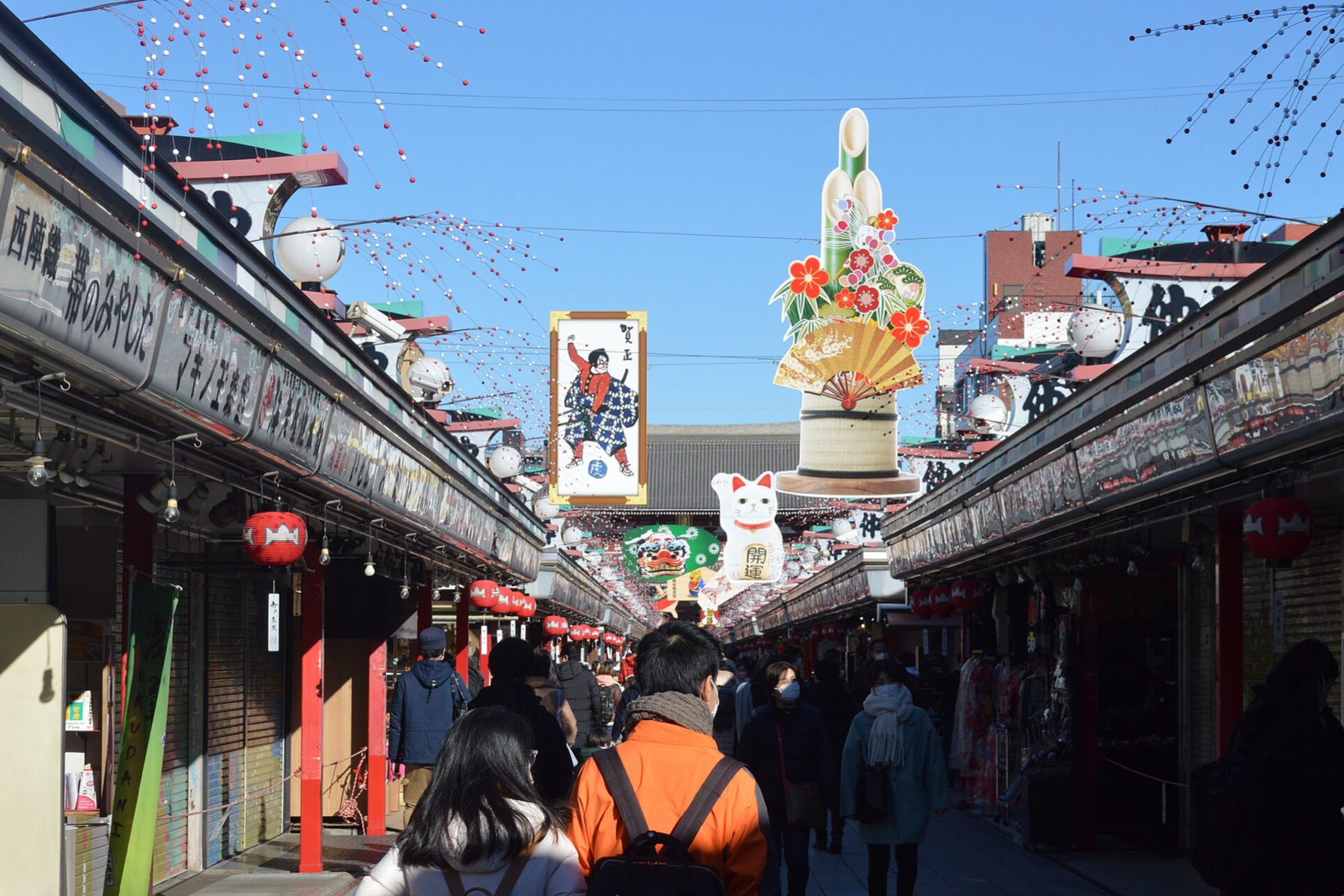
The short answer: Tokyo's street food lives in markets and shopping streets rather than on the sidewalks. Go to Tsukiji Outer Market in the morning for grilled seafood and rolled omelet, Ameyoko in the afternoon for takoyaki and cheap fried snacks, Nakamise in Asakusa for traditional sweets, Yanaka Ginza for butcher-shop menchi katsu, and a yokocho alley at night for skewers and beer. The rule that surprises most visitors: in many of these places you shouldn't walk while you eat. Buy your food, stand near the stall, finish, then move on.
Prices below come from guides published from 2025 to 2026, and ¥1,000 was worth about US$6.30 on November 5, 2026. For sit-down restaurants, see our guide to where to eat in Tokyo.
Does Tokyo actually have street food?
Short answer: yes, but not in the Bangkok sense. Traditional movable stalls, called yatai, have been decreasing for years, and they're most easily found at festivals. What you'll mostly eat is food from market counters and small shops.
| Where | Go if you want | Best time | Eating on the move? |
|---|---|---|---|
| Tsukiji Outer Market | Seafood and tamagoyaki | 9am to noon, not Sundays | Asked not to |
| Ameyoko | Cheap, loud, varied snacks | Afternoon | Step aside to eat |
| Nakamise, Asakusa | Traditional sweets | Morning, before the crowds | Not allowed |
| Yanaka Ginza | Butcher-shop fried snacks | Late morning, not Mondays | Eat near the shop |
| Yokocho alleys | Skewers, beer, a stool | Evening | You sit or stand inside |
What should you eat at Tsukiji Outer Market?
Short answer: tamagoyaki, seared tuna, grilled scallops and an eel skewer, eaten where they're sold, ideally by late morning.
The wholesale market moved to Toyosu in 2018, but the outer market stayed, and it's still the most concentrated place in Tokyo for seafood snacks. Shops typically run from about 5am to 2pm. Many close on Sundays and national holidays, and some close on selected Wednesdays. The market's own site asks visitors to give professional buyers priority until 9am, so 9am to 11am is a considerate window. Take the Hibiya Line to Tsukiji or the Oedo Line to Tsukijishijo.
Time Out's guide to Tsukiji snacks, from May 2025, is the source of these picks and prices:
- Tamagoyaki sandwich at Tsukiji Shoro (¥400). A rolled omelet specialist founded in 1924. Tsukiji Yamacho is another specialist, and the market lists it as open every day, which helps on a Sunday.
- Flame-seared tuna skewer at Tsukiji Kiyomura Maguro (¥1,000). The splurge of the morning, if you came for tuna.
- Grilled scallop at Kakigoya Tsukiji Shokudo (¥600). A seafood izakaya with a stall out front.
- Eel skewer at Nisshin Tasuke (¥400). Order it plain or with sauce.
- Horumon-don at Kitsuneya (¥900). Rice topped with organ meats in miso sauce, for anyone who wants more than a snack.
- Taiyaki at Tsukiji Sanokiya (¥280). The fish-shaped red bean pancake, a good way to finish.
The market also has its own rules. Eat inside the shop or in a designated area, because the site says "wandering around while eating can bother passerby." Put large bags in a locker, keep your group small, don't touch raw food, ask before taking pictures of a shop, and don't haggle.
What should you eat at Ameyoko?
Short answer: takoyaki, menchi katsu, pineapple on a stick and a kebab if you've had enough Japanese food. It's the best stop if you like noise and low prices.
Ameyoko began as a postwar black market and runs for about 500 meters beside the JR tracks between Ueno and Okachimachi stations. Its name is usually read as "candy store alley," though some say the "ame" refers to America, after the U.S. goods once sold there. Stores typically open from around 10am to 8pm, and many close on selected Wednesdays.
- Minatoya. Takoyaki at ¥300 for four, plus seafood rice bowls. A May 2026 guide says the takoyaki line moves fast.
- Niku no Ohyama. A butcher with a standing corner, at 6-13-2 Ueno. Menchi katsu, a breaded minced meat cutlet, comes at ¥150, ¥220 and ¥420, and croquettes are ¥80.
- Hyakkaen. A fruit stall selling pineapple skewers and cups of cut fruit, handy when you've had too much fried food.
- Tentenraku and Oskar Kebab. Both are in the Ameyoko Center Building, known for imported food, spices and herbs. Tentenraku serves xiaolongbao and skewers of beef tendon and lamb, and Oskar does kebabs for under ¥1,000.
- Cha no Kiminoen. Matcha soft serve, at 4-9-13 Ueno.
- Uncle Joe. Korean street food such as tteokbokki and hotteok, if your group wants variety.
If you'd rather stay put, Tachinomi Kadokura is a standing bar for sashimi and fried food, and Daitoryo serves offal stew and grilled offal from 10am.
What should you eat on Nakamise in Asakusa?
Short answer: traditional sweets, not lunch. This street is for a snack on the way to the temple.
Nakamise runs about 250 meters from the Kaminarimon gate to Sensoji, with 87 shops according to its association, and traces its origins to around 1700. A listing supervised by the shopping street's organization says plainly that eating while walking is not allowed. Eat beside the shop, or carry your purchase away from the crowded path. Hours vary, but many shops are open from around 9am or 10am and begin closing after 5pm.
- Kibi Dango Azuma. Small millet dumplings on a stick, coated in roasted soybean powder. Look for the white rabbit logo at the foot of the street, on the west side.
- Kimura-ya. Ningyoyaki, griddle cakes in the shape of pigeons, lanterns and the pagoda, which you can watch being made.
- Ichiban-ya. Charcoal-grilled senbei rice crackers in dozens of flavors.
- Tokiwado. Kaminari okoshi, the crisp puffed rice sweets long associated with Asakusa.
For something savory, walk west to Hoppy Street, a strip of bars known for nikomi, a slow-cooked stew, and Hoppy, a beer-like drink often mixed with shochu.
Where should you go at Yanaka Ginza?
Short answer: go if you want an older, neighborhood feel and a hot menchi katsu from a butcher.
Yanaka Ginza is a retro street of over 70 small shops, only about 170 meters long and about a 5-minute walk from the West Exit of Nippori Station. It's a good contrast to Ameyoko, and you can do both in one afternoon. A February 2026 guide suggests:
- Niku no Suzuki. The famous menchi katsu, which was ¥230 in a February 2025 update. Closed Mondays and Tuesdays.
- Niku no Sato. Yanaka menchi and croquettes. Fried items start at noon, and it's closed Mondays.
- Maruhatsu Fukushima Shoten. Grilled shrimp, scallop and ayu skewers. Closed Sundays and holidays.
- Yanaka Shippoya. Cat-tail-shaped donuts, in a neighborhood that's proud of its cats. Hours are irregular.
One guide advises buying, stepping aside and eating near the shop. If you want a drink with your snack, Echigoya Saketen is a standing bar that lets you bring in food from other shops.
Which yokocho alleys are best for street-style food at night?
Short answer: Omoide Yokocho for atmosphere, Ebisu Yokocho for a lively late night, and Harmonica Yokocho for a slower evening. They aren't technically street food, but they're the closest thing after dark.
A yokocho is a narrow alley of tiny bars and eateries. Tokyo's official tourism site says most come alive in the evening, and hours vary by shop.
- Omoide Yokocho, Shinjuku. About 60 bars and restaurants next to the West Exit, grown out of a market on burned-out land after World War II. Most serve motsuyaki (grilled offal) and yakitori. If you love eel, Kabuto serves skewers of different parts in sequence, with no menu to order from and a limit of three alcoholic drinks.
- Ebisu Yokocho. A covered alley about two minutes from Ebisu Station's East Exit, with about 20 eateries, most open late. Its shop list includes Uo-maru for grilled seafood, Bulldog for fried skewers and Denraku for Kyoto-style oden.
- Harmonica Yokocho, Kichijoji. Narrow lanes north of the station, with tiny standing bars serving drinks and yakitori.
- Yurakucho Sanchoku Yokocho. Eleven bars serving food from different regions of Japan, listed as open 24 hours.
- Nonbei Yokocho, Shibuya. Our guide to eating near Shibuya Crossing covers this one.
A few things help here. Many places are tiny, so keep your group small. Some charge a table fee or bring a small appetizer you pay for, and some shops have a 90-minute limit or require a food and drink order per person. Carry cash: in 2021, Omoide Yokocho's own site said about 60% of its shops took only cash. Filming and photo shoots there need prior permission, and smoking in the lanes is banned.
What are the rules for eating on the street in Tokyo?
Short answer: there's generally no law against it, but in crowded places it's seen as rude, and some streets ask you not to do it.
- Know where the rule is explicit. Tsukiji and Nakamise ask you to stop and eat. Elsewhere, it's a matter of manners, and one guide says Tokyo is much less relaxed about it than Osaka. Festivals are the usual exception.
- Stay by the stall. Step out of the flow of people, finish your food there, and hand back your skewer or cup if the shop has a bin. If there's a sign asking you to eat inside, follow it.
- Carry a small bag. Public trash cans are scarce, so plan to take your wrappers with you.
- Watch your drink. Around Shibuya Station, street drinking is banned in designated areas from 6pm to 5am.
A practical test from one travel writer: if it's busy and crowded, stop; if it's open and relaxed, you can be less strict.
How would you fit this into one day?
Short answer: start at the fish market and finish in an alley, with plenty of walking in between.
Be at Tsukiji around 9am on a weekday. Then take the Hibiya Line directly to Ueno for a walk down Ameyoko. From Ueno, the Ginza Line goes straight to Asakusa for sweets on Nakamise, a visit to Sensoji and a stew on Hoppy Street. Finish at Omoide Yokocho or Ebisu Yokocho. That's a lot of food, so share portions, and swap in Yanaka Ginza for a quieter afternoon.
FAQ
Is it rude to eat while walking in Tokyo?
In crowded places it often is, though it isn't generally illegal. Tsukiji and Nakamise explicitly ask you not to. The safest habit is to eat near the stall where you bought your food.
When is Tsukiji Outer Market open?
Hours vary by shop, typically about 5am to 2pm, with restaurants often opening around 7am. Many shops close on Sundays, national holidays and selected Wednesdays. Tsukiji's site has a calendar.
How much does street food cost in Tokyo?
Expect about ¥80 for a croquette at Ameyoko, ¥300 to ¥600 for most snacks, and ¥1,000 for a seared tuna skewer at Tsukiji. Budget about ¥3,000 for a full morning of grazing, a figure we estimated from those prices.
Do Tokyo street food stalls take cards?
Don't count on it. Some do, particularly on Nakamise, where most shops accept many card types. At small stalls and yokocho bars, carry cash.
Is Ameyoko or Tsukiji better?
Choose Tsukiji if seafood is the point, and go in the morning. Choose Ameyoko if you want variety and low prices, and go in the afternoon. They're on the same subway line, so you can do both.
Sources
- Tsukiji Outer Market, official site: https://www.tsukiji.or.jp/english/
- Tsukiji Outer Market, how to enjoy the market: https://www.tsukiji.or.jp/english/how-to-enjoy/
- Tsukiji Outer Market, visitor rules: https://www.tsukiji.or.jp/english/guide/
- Tsukiji Outer Market, tamagoyaki shops: https://www.tsukiji.or.jp/english/shoplist/cat-c/cat-10/
- Time Out Tokyo, Tsukiji street snacks (May 2025): https://www.timeout.com/tokyo/restaurants/top-15-tsukiji-street-snacks
- Japan Guide, Tsukiji Outer Market: https://www.japan-guide.com/e/e3021.html
- Japan Guide, Ueno and Ameyoko: https://www.japan-guide.com/e/e3012.html
- Japan Guide, Asakusa and Nakamise: https://www.japan-guide.com/e/e3004.html
- Japan Guide, restaurants in Japan, on yatai: https://www.japan-guide.com/e/e2036.html
- Go Tokyo, Ueno and Ameyoko: https://www.gotokyo.org/en/destinations/northern-tokyo/ueno/index.html
- Go Tokyo, exploring yokocho alleyways: https://www.gotokyo.org/en/story/guide/drink-and-dine-like-a-local-a-guide-to-exploring-yokocho-alleyways
- Go Tokyo, Kichijoji: https://www.gotokyo.org/en/destinations/western-tokyo/kichijoji/index.html
- Magical Trip, Ameyoko street food (updated December 2025): https://www.magical-trip.com/media/best-street-food-at-ueno-2024-5-must-try-spots-in-ameyoko-market/
- Magical Trip, what to eat in Ueno (May 2026): https://www.magical-trip.com/media/ueno-food-guide-from-street-eats-to-global-treats/
- Asakusa Nakamise Shopping Street Promotion Association, about the street: https://www.asakusa-nakamise.jp/about/index.html
- Asakusa Nakamise Shopping Street Promotion Association, FAQ: https://www.asakusa-nakamise.jp/faq/index.html
- Good Luck Trip, Nakamise listing and walking rule: https://www.gltjp.com/en/directory/item/14456
- Fun Japan, Asakusa street food: https://www.fun-japan.jp/en/articles/12278
- Japan Wonder Travel, Nakamise snacks (updated July 2025): https://jw-webmagazine.com/tips/nakamise-shopping-street-in-asakusa/
- Japan Wonder Travel, Yanaka Ginza guide (updated December 2025): https://jw-webmagazine.com/tips/yanaka-ginza-guide/
- Magical Trip, Yanaka Ginza street food (February 2026): https://www.magical-trip.com/media/recommended-street-foods-in-yanaka-ginza/
- Magical Trip, Niku no Suzuki (updated February 2025): https://www.magical-trip.com/media/niku-no-suzuki-famous-street-food-place-yanaka-ginza-specializing-croquette-menchi-katsu/
- Omoide Yokocho, official English site: https://en.shinjuku-omoide.com/
- Omoide Yokocho, for first-time visitors (April 2021): https://en.shinjuku-omoide.com/featured/feature01
- Ebisu Yokocho, official shop list: https://www.ebisu-yokocho.com/shop/
- Islands, on eating while walking (August 2026): https://www.islands.com/2240241/eating-while-walking-breaking-japanese-food-etiquette-rule-nowhere-near-bad-people-make-seem/
- Coto Academy, tabearuki: https://cotoacademy.com/walking-while-eating-in-japan-tabearuki/
- ExchangeRate-API, USD to JPY on November 5, 2026: https://open.er-api.com/v6/latest/USD
Cover photo: Asturio Cantabrio, CC BY-SA 4.0, via Wikimedia Commons.