How to Handle Different Budgets on a Group Trip (With Scripts)

The short answer: get everyone's real number before you pick a destination, ideally anonymously. Build the required costs of the trip around the lowest number, then let anyone spend more on their own upgrades, like a better room or an extra dinner. Sort every cost into required, optional and individual before anyone books. The goal isn't for everyone to spend the same. It's that nobody spends more than they said they could, and nobody has to explain why.
Why do different budgets cause so much trouble on group trips?
Short answer: because people hide the number, then find out on day three.
The surveys back this up. In an Experian survey from June 2025 of more than 700 US adults who had traveled with friends, 35% of millennials named different budget ranges as their biggest money challenge. More than half of Gen Z and millennial respondents reported a money disagreement while traveling, and 1 in 5 said they'd ended a friendship over a money issue. Experian is a credit company and these are self-reported answers, but the pattern is familiar.
The quiet version may be more common. In a CFP Board survey from January 2026 of more than 1,100 Americans aged 25 to 64, two-thirds said they had skipped at least one social commitment in the past two years because they couldn't afford it, group trips included. And 56% of those who declined never told their friends that money was the reason.
So when a friend says "that weekend's tricky," it may not be about the weekend.
How do we start the money conversation?
Short answer: raise it early, make it about the trip and not anyone's income, and collect the numbers privately.
Timing is what makes it easy. Before a destination exists, a budget is just a planning input. After someone has fallen in love with a villa, it's a veto.
Whoever is organizing can open with this:
"Before we pick a place, I'm sending a two-question form so we can plan something that works for everyone. Nobody will see who said what."
A Google Form works well. By default, Google Forms doesn't collect email addresses. If you turn on "Limit to 1 response," people have to sign in, but Google says usernames aren't recorded unless you've turned on email collection. Ask two things:
- What's the most you'd want to spend on this trip, not counting flights? Offer ranges, so nobody has to type a figure.
- What would you rather spend on? Food, where you stay, activities, or saving money overall.
In a group of three, anonymity is thin, so it may be kinder to just ask each person in a private message.
One more question is worth asking: is the problem the total, or the timing? "I can't afford $1,500" and "I can't pay $600 by Friday" need different fixes. For the second, look for a later deposit date. Airbnb's terms describe "Pay Part Now, Part Later" and "Reserve Now, Pay Later" options, depending on the listing and payment method.
How do we set a budget range before booking?
Short answer: the lowest number sets the required costs, and everything above that is optional.
Averaging doesn't work. If budgets run from $1,200 to $3,000, planning around $2,100 prices out the person you were trying to include. Here's how it works with four friends, five nights, and upper limits of $1,200, $1,500, $2,000 and $3,000, not counting flights:
| Category | What it means | In this example |
|---|---|---|
| Required | Everyone pays it, and it must fit the lowest budget | $1,000: lodging $500, food $250, activities $150, local transport $100 |
| Buffer | Held back for surprises | $200, which brings the total to the $1,200 limit |
| Optional | Group plans anyone can skip without guilt | The boat day, the tasting menu |
| Individual | Each person's own call | A nicer room, shopping, a spa morning |
Keep that buffer. In the same Experian survey, 40% said the most they'd ever overspent on a group trip was 11% to 25% over budget, according to a GOBankingRates summary, and unexpected costs were one of the top stress points. A cushion of about 20% covers most of that.
The biggest lever is the destination itself. Post Office Travel Money's 2026 Winter Sun barometer priced the same eight items, including dinner for two, in 24 places. The basket came to about €68 in Cape Town, €96 in the Algarve and €168 in Tobago. That leaves out flights and hotels, but it shows how far one budget can stretch depending on where you go. Flights matter too, especially if you're starting from different places, so see how to plan a group trip from different cities.
How do tiered stays work?
Short answer: stay under the same roof or on the same street, in rooms at different prices.
Lodging is usually the largest shared cost and the easiest one to make flexible. A few ways to do it:
- One hotel, several room sizes. The Hoxton in Shoreditch, London, runs from a 12-square-meter "Shoebox" to a 25-square-meter "Roomy." Everyone stays in the same building, and the room is each person's choice.
- A hostel with private rooms. Generator's King's Cross location in London listed dorm beds from about €13 to €19 and private rooms from about €58 for a twin or €86 for a king when we checked. Those are "from" prices, so yours will depend on the date.
- Beds and rooms in the same building. Freehand Chicago lists private quads with four twin beds and a privacy curtain on each bed, alongside queen and king rooms. Freehand also has hotels in Los Angeles, Miami and New York.
- Two places, one neighborhood. Pick a hotel and a cheaper guesthouse a short walk apart, and meet for breakfast. You lose very little.
- A rental with rooms priced differently. If one bedroom has its own bath and another is a converted office, an even split isn't fair. Have everyone write down what each room is worth to them, then set prices that add up to the total. Carnegie Mellon researchers built a tool called Spliddit on this same idea, for dividing rent. The site wasn't loading when we checked, but the method works on paper.
- A shorter stay. Joining for three nights of five is a real option, not a consolation prize. Split the lodging by person-nights.
How do we split costs fairly when people spend differently?
Short answer: share only what everyone uses and agreed to, and itemize the rest.
We cover the methods in how to split travel costs with friends. A few points matter more when budgets differ:
- Label dinners in advance. Mark each one as "everyone" or "optional," and agree a rough price per person for the big one. A bill that's a surprise is the one that causes the fight.
- Don't let the tight budget front the money. Someone has to put the rental on one card. Airbnb says you can't split a stay's total across multiple payment methods, so one person usually pays and gets paid back. That should be someone who can float it, and everyone should repay within a day or two.
- Use an app that handles uneven splits. Splitwise splits by percentages or shares, and Tricount lets you set each person's share. That way an upgrade only lands on the person who chose it.
- Decide about the guest of honor early. At a birthday or a bachelorette, everyone covering one person's share is a real extra cost for each friend. Say the number before people commit.
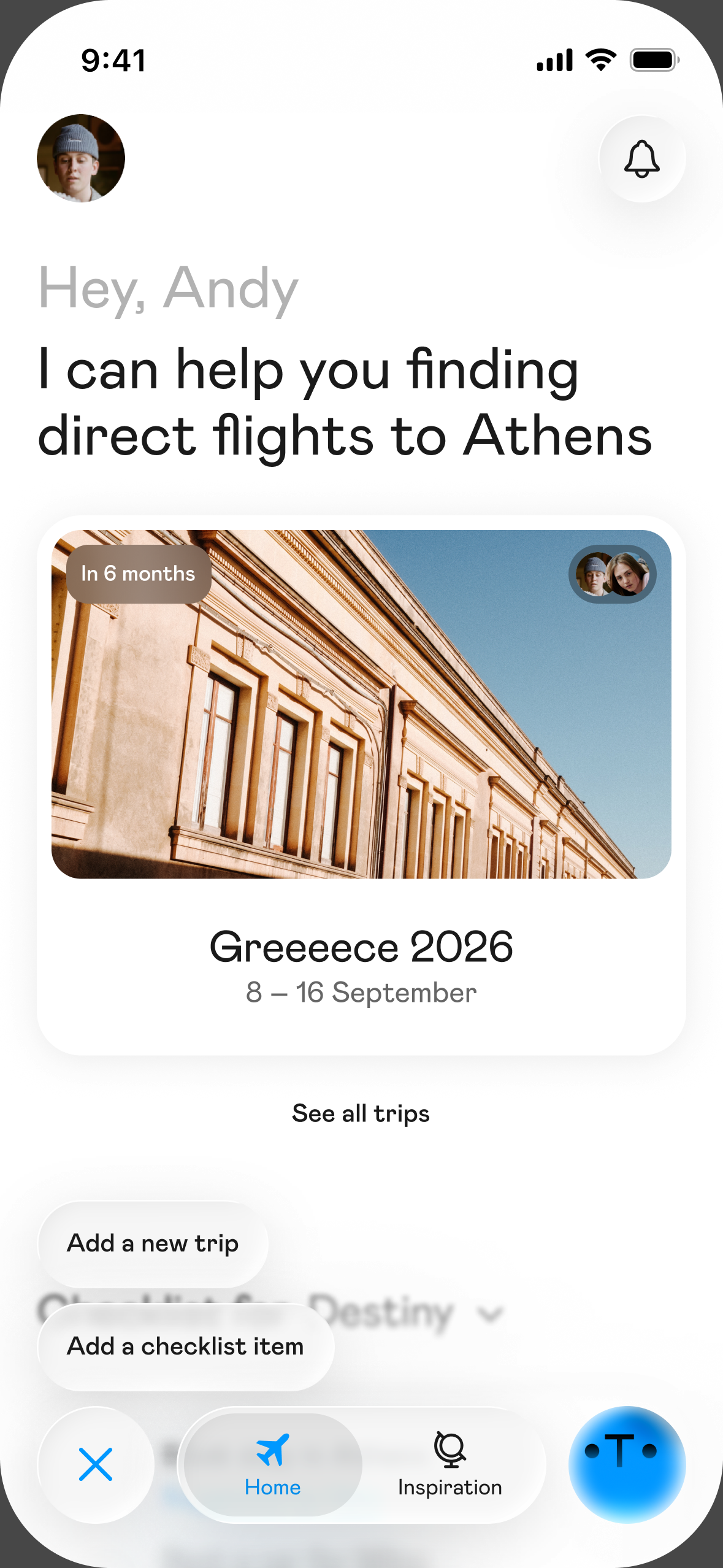
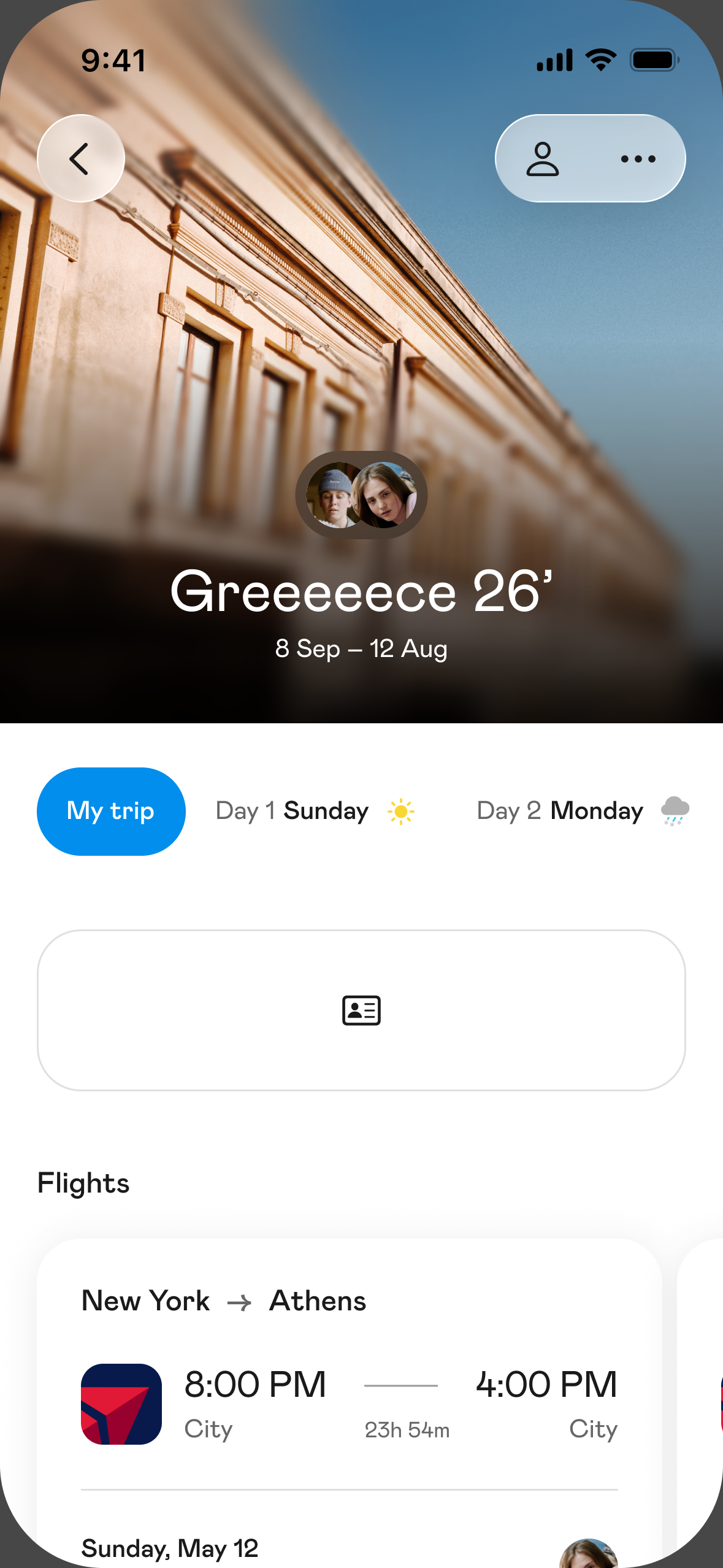
- Keep the optional plans visibly optional. Put them on a separate list in your shared doc. In Otta, you can mark places as "Must Do" or "Nice to Do" in the plan everyone on the trip can see. Either way, nobody has to ask what's expected.
Should friends with more money pay more? Only if they offer, and only for something specific. A quiet "let me cover your boat ticket" can be generous. A standing arrangement where one friend always subsidizes another tends to get awkward on both sides.
What do I say in the awkward moments?
Short answer: keep it short, name the limit, and offer a way forward. No apology or explanation is required.
When you're on the tighter budget:
"I'm in if lodging stays under $100 a night. If the group wants to go higher, no hard feelings. I'll find somewhere nearby and meet you."
When a pricey plan comes up:
"That one's a bit over for me. I'll skip dinner and meet you for drinks after. Don't change it on my account."
When you have more to spend:
"Happy with the group plan for the shared stuff. I might upgrade my own room, and that doesn't need to change anything for anyone else."
When the bill arrives and it isn't even:
"Can we itemize this one? I had one glass and you all had the bottle."
When someone owes you:
"Your share of the rental is $420. Can you send it by Friday so I can clear the card?"
When a friend keeps quietly opting out:
"Just checking, has this gotten more expensive than you signed up for? We can easily change Thursday."
When you'd like to help:
"I'd love to cover your boat ticket, no payback. Totally fine to say no if that's weird."
When you need to drop out:
"I ran the numbers and I can't make this one work. Please don't change anything for me. Save me a spot on the next one."
What if the budgets are just too far apart?
Short answer: change the shape of the trip, not the friend.
- Make it a two-speed trip. Spend three shared days at the lower budget, then let some people extend somewhere fancier.
- Change the place or the season. Going somewhere cheaper, or outside peak season, can close more of the gap than any rule about dinners.
- Let people join for part of it. A long weekend inside a week-long trip still counts as being there.
- Accept the no. Sometimes this trip isn't the right one for everyone. Plan a cheaper one next, so it doesn't become a pattern.
For the rest of the planning, see how to organize a group trip.
FAQ
How do you ask friends about their budget without making it weird?
Ask early, before there's a destination, and ask everyone the same question at once. An anonymous form with ranges makes it about the trip's design, not anyone's income.
Should a group trip be planned around the lowest budget?
For the required costs, yes. Everyone has to be able to afford those. Above that, people can spend whatever they like on their own upgrades and optional plans, so nobody is held back.
Is it fair to split a rental evenly if the rooms are different?
Not usually. Price the rooms differently, so the person with the private bath pays more than the person in the smaller room. Agree on the prices before anyone books.
Should the friend with more money pay more?
Only if they offer, and it works best for a specific thing rather than as a rule. Nobody should expect it, and nobody should feel they owe anything for it.
How much extra should we budget for a group trip?
About 20% is a sensible cushion. In Experian's survey, 40% said their worst group-trip overspend was 11% to 25% over budget.
What if someone can't pay yet but can afford the trip?
That's a timing problem, not a budget one. Look for later deposit dates or options to pay part later, and have someone who can float the cost put it on their card, with a firm repayment date.
Sources
- Experian, financial stress of traveling with friends (June 2025): https://www.experian.com/blogs/ask-experian/survey-financial-stress-of-traveling-with-friends/
- GOBankingRates, on Experian's group trip figures: https://www.gobankingrates.com/?p=2875746
- Fortune, on the CFP Board survey (March 17, 2026): https://fortune.com/2026/03/17/financial-loneliness-gen-z-millennials-skipping-social-events-money-constraints-cfp-board-report/
- Google, Collect respondents' email addresses in Forms: https://support.google.com/appsheet/answer/14915518?hl=en
- Google Docs Editors Help, publishing and sharing a form: https://support.google.com/docs/answer/2839588?hl=en
- Airbnb, Payments Terms of Service: https://www.airbnb.com/help/article/2909
- Airbnb Help, paying with multiple payment methods: https://www.airbnb.com/help/article/444
- Travel Tomorrow, on Post Office Travel Money's 2026 Winter Sun barometer (September 30, 2026): https://traveltomorrow.com/planning-a-winter-escape-these-are-the-best-value-destinations-in-2026/
- The Hoxton, Shoreditch, rooms: https://thehoxton.com/london/shoreditch/rooms/
- Generator, London King's Cross: https://staygenerator.com/hostels/london/kingscross
- Freehand Chicago, rooms: https://freehandhotels.com/chicago/rooms/
- Freehand Hotels: https://freehandhotels.com/
- Carnegie Mellon University, on Spliddit (2014): https://www.cmu.edu/news/stories/archives/2014/november/november4_spliddit.html
- Splitwise: https://www.splitwise.com/
- Tricount, features: https://www.tricount.com/en/features