Where and When to See the Northern Lights in Winter 2026 to 2027
The short answer: The northern lights season in the Arctic runs from roughly late August or September to late March or early April, and you need two things on the same night: darkness and clear skies. For winter 2026 to 2027, base yourself under the auroral zone (northern Norway, Swedish and Finnish Lapland, Iceland, interior Alaska or Canada's Northwest Territories), plan at least 3 to 4 nights, and pick the place by what you want to do during the day. The Sun is past the peak of its current cycle, but strong displays still happen; clouds are a bigger risk than solar activity.
When is the northern lights season in 2026 to 2027?
From about September to March, with local variations. Here is what each destination's own tourism office says.
| Destination | Season, per official tourism sites | Worth knowing |
|---|---|---|
| Tromsø, Norway | Late August to early April | Polar Night lasts approximately November 27 to January 15 |
| Northern Norway in general | Late August to late March | Visit Norway says peak viewing is often between 11pm and 2am |
| Finnish Lapland | End of August to early April | Visible on roughly 200 nights a year, or "every other clear night" |
| Iceland | September to April | Most active around the September and March equinoxes |
| Fairbanks, Alaska | August 21 to April 21 | Visible about four out of five nights when it's clear and dark |
| Yellowknife, Canada | Late August to mid October, then from December | Clouds usually settle in from mid October |
NOAA's Space Weather Prediction Center notes that the weeks around the spring and fall equinoxes tend to bring larger geomagnetic storms. So if you can choose, late September to October or late February to March gives you a good mix of activity, long enough nights and milder cold than deep winter.
Is 2026 to 2027 still a good winter for the northern lights?
Yes, though it's no longer "solar maximum" news. NASA and NOAA announced in October 2024 that the Sun had reached the solar maximum period of Solar Cycle 25, and said it could last about another year. NOAA's original prediction put the peak window between November 2024 and March 2026, so winter 2026 to 2027 falls after that, in what is likely the cycle's declining phase.
What that means for you:
- Big storms become less frequent, but NASA and NOAA have said strong events can still happen after the peak.
- At the latitudes in this guide, you don't need a big storm. Places like Tromsø, Abisko and Fairbanks sit under the auroral oval, so even modest activity can be visible on a clear night.
- Sightings far south of the Arctic get rarer as the cycle winds down.
Where should I go to see the northern lights?
Pick the place by what you want to do in the daytime and how you like to travel. None of these is right for everyone.
- If you want a city base with lots of tours: Tromsø, Norway. It's the main hub for northern lights trips in Norway, with tour operators that chase clear skies. Visit Norway notes it gets very busy in winter and suggests autumn, or nearby Senja, Lyngen or Alta, for fewer people. Between about November 27 and January 15 the sun stays below the horizon, so expect a few hours of blue twilight instead of daylight.
- If you love dramatic landscapes and photography: Lofoten, Norway. Mountains rising out of the sea make the best foregrounds in this list. You'll want a car, and it's less of a "sit in a tour bus" place.
- If you want a dark, quiet base you can reach by train: Abisko, Sweden. The STF Aurora Sky Station sits about 900 meters up Mount Nuolja, reached by chairlift. Night visits for the 2026 to 2027 season are listed from October 19, 2026 to March 27, 2027, from 8:30pm to no later than 1am, per the station's site. Abisko has its own train stops on the line between Kiruna and Narvik.
- If you're traveling with kids or want snow activities: Finnish Lapland. Rovaniemi is the easy entry point, with tours that drive a short way out of town to frozen lakes and open fells. Saariselkä, further north near Ivalo airport and Urho Kekkonen National Park, is smaller and darker, and is known for glass-roofed cabins.
- If you want a road trip and other sights too: Iceland. You can base in Reykjavík but you'll need to leave the city lights. Þingvellir National Park, under an hour's drive northeast, is a common first stop. The Icelandic Met Office publishes cloud and aurora forecasts that are made for this.
- If you're in the US and want the shortest trip: Fairbanks, Alaska. No passport needed for US citizens, and the visitor bureau says people who stay at least three nights and stay out in the late evening have a better than 90 percent chance of seeing the aurora.
- If you want long, cold winter nights and a dedicated aurora scene: Yellowknife, Canada. It sits under the auroral oval, with tour operators running viewing sites outside town. Plan for serious cold from December.
How do I read a northern lights forecast?
Check three things, in this order: cloud cover, darkness, then aurora activity.
- Cloud cover first. A strong aurora behind thick cloud is invisible. Use the local weather service: the Icelandic Met Office aurora page shows cloud forecasts in six-hour steps for six days, with clear areas in white. In Norway, Sweden and Finland, check the national weather service forecasts and be ready to drive toward clearer skies.
- Darkness. You need real night, away from streetlights. A full moon makes the aurora look fainter, per NOAA.
- Activity (Kp index). Kp runs from 0 to 9 and measures geomagnetic activity. Higher Kp pushes the aurora further south and makes it brighter. Under the auroral oval (Tromsø, Abisko, Fairbanks), even low Kp nights can be good. Further south, you need higher numbers.
Useful tools:
- NOAA SWPC aurora 30-minute forecast: a map of where the aurora is likely in the next 30 to 90 minutes, updated every 5 minutes.
- NOAA SWPC aurora dashboard (experimental): likelihood maps for tonight and tomorrow night over North America.
- Icelandic Met Office aurora forecast: cloud cover plus a 0 to 9 activity scale, made for Iceland.
The best window is usually an hour or two either side of midnight, per NOAA, and Visit Norway says 11pm to 2am is often peak. Start looking from late evening and stay patient.
How many nights should I plan?
At least 3 to 4 nights, and 5 if you can. The aurora isn't the limit; the weather is. Fairbanks' own advice is a minimum of three nights out in the late evening.
A simple plan:
- Book 4 or more nights in one place instead of moving every night.
- Keep evenings free; plan daytime activities that work in twilight.
- Check cloud forecasts each afternoon and decide that day.
- Ask your hotel if it offers an aurora wake-up call (some do in Fairbanks and Iceland).
Should I take a tour or drive myself?
Take a tour if you're new to winter driving or only have a few nights; drive yourself if you're experienced and want flexibility.
| Option | Good for | Watch out for |
|---|---|---|
| Small-group tour | First-timers, short trips, cloudy forecasts (guides chase clear gaps) | Fixed timing, cost per person |
| Self-drive | Photographers, Lofoten and Iceland, couples who want quiet | Ice, wind, darkness, closed roads |
| Viewing site or station (Abisko, Yellowknife) | Families, people who hate cold waiting outside | Less flexibility if your spot is cloudy |
Winter driving cautions: Roads in the Arctic can be icy, snowy and dark for most of the day. In Iceland, Safetravel recommends checking weather and road conditions before every drive, since they "change fast" and roads can close. Don't stop on the road shoulder to look at the sky; pull into a proper parking area. Rent a car with winter tires and leave plenty of time.
How do I photograph the northern lights with my phone?
Use night mode on a tripod and keep the phone completely still. The camera often picks up more color than your eyes do.
- Use a small tripod or rest the phone on something solid; a few seconds of exposure need zero movement.
- Tap to focus on a distant light or the horizon, then lock it.
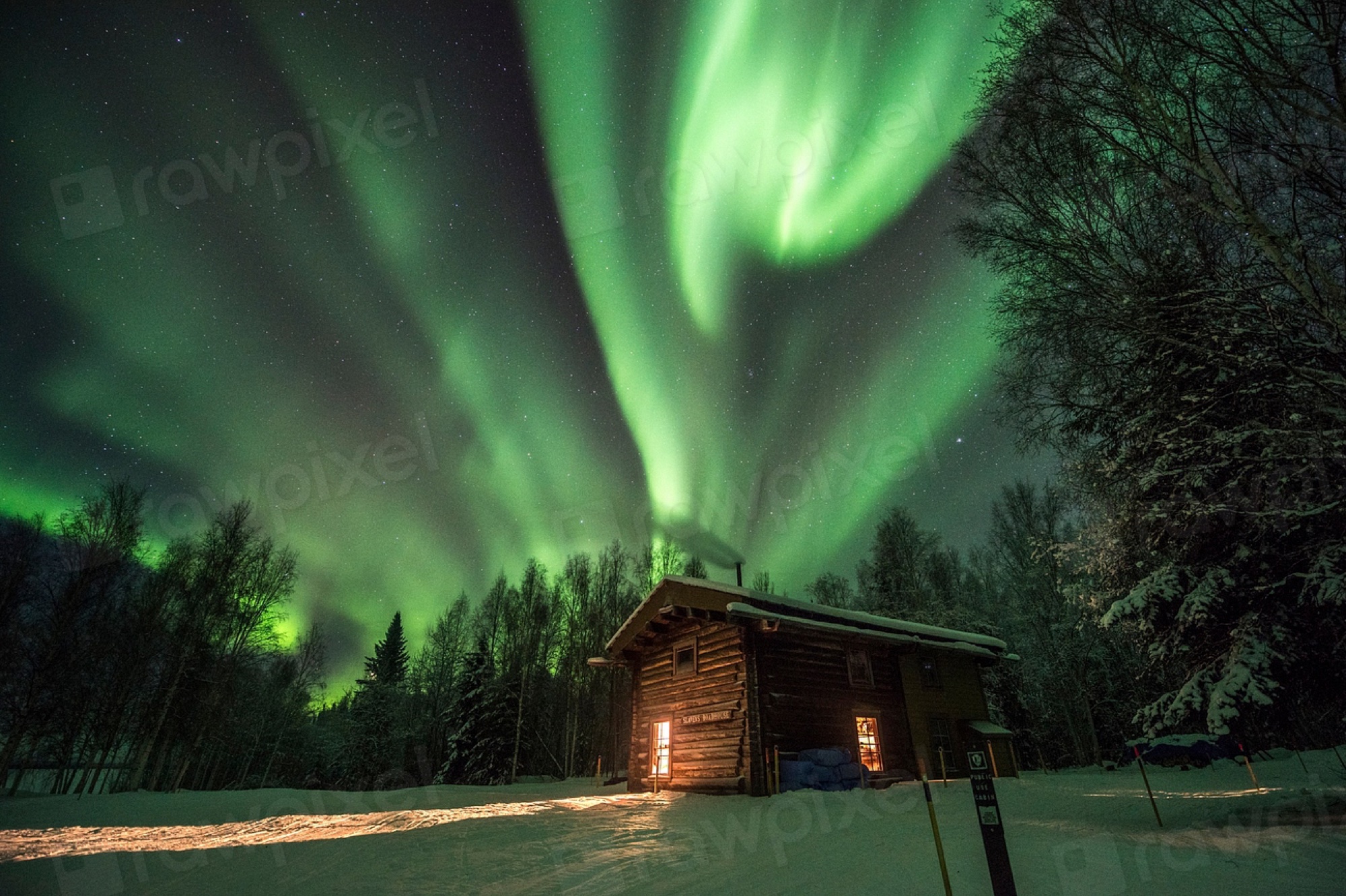
- Put something in the foreground (a cabin, mountains, trees) for scale.
- Cold drains batteries fast. Keep the phone and a power bank in an inside pocket.
What should I wear?
Layers, from the skin out, and more than you think. You'll be standing still for a long time in the cold.
- Base: wool thermal top and leggings (no cotton).
- Middle: fleece or wool sweater, plus insulated trousers.
- Outer: a warm down or insulated parka and windproof trousers.
- Feet: insulated winter boots with room for thick wool socks.
- Extras: hat that covers your ears, a neck warmer, thin gloves under mittens, hand warmers.
Some tours lend thermal suits and boots; ask when you reserve.
FAQ
What month is best to see the northern lights in 2026 to 2027? Any month from September to March can work. If you can choose, aim for late September to October or late February to March, when activity tends to be higher around the equinoxes and the cold is milder than in January.
Is the solar maximum over? NASA and NOAA announced the solar maximum period in October 2024, and NOAA's predicted peak window ended in March 2026. Winter 2026 to 2027 is likely in the declining phase, but strong displays still happen, and at Arctic latitudes you don't need a big storm.
What Kp do I need to see the aurora? Under the auroral oval (Tromsø, Abisko, Fairbanks, Yellowknife), low Kp nights can still show the aurora if it's clear. Further south, you need higher Kp values. Cloud cover matters more than Kp.
Can you see the northern lights from Reykjavík? Sometimes, but city lights wash them out. Drive out of town, for example toward Þingvellir National Park, or join a tour that picks a dark spot based on the cloud forecast.
How many nights do I need to see the northern lights? Plan at least 3 to 4 nights. More nights mean more chances at a clear sky, which is the main thing you can't control.
Sources
- NASA and NOAA, Sun reaches solar maximum period (Oct 2024): https://www.spaceweather.gov/news/joint-solar-maximum-announcement-nasa-and-noaa
- NASA Scientific Visualization Studio, solar maximum announcement: https://svs.gsfc.nasa.gov/14683/
- NOAA SWPC, Solar Cycle Progression: https://www.spaceweather.gov/products/solar-cycle-progression
- NOAA SWPC, Tips on viewing the aurora: https://www.spaceweather.gov/content/tips-viewing-aurora
- NOAA SWPC, Aurora 30-minute forecast: https://www.swpc.noaa.gov/products/aurora-30-minute-forecast
- NOAA SWPC, Aurora dashboard (experimental): https://www.swpc.noaa.gov/communities/aurora-dashboard-experimental
- Icelandic Met Office, Aurora forecast: https://en.vedur.is/weather/forecasts/aurora/
- Visit Iceland, Northern lights: https://www.visiticeland.com/the-northern-lights
- Safetravel Iceland: https://safetravel.is/
- Visit Tromsø, Northern lights: https://www.visittromso.no/northern-lights
- Visit Tromsø, Winter: https://www.visittromso.no/seasons/winter
- Visit Norway, Northern lights: https://www.visitnorway.com/things-to-do/nature-attractions/northern-lights/
- STF Aurora Sky Station, Night visit: https://www.auroraskystation.se/en/night-visit/
- Swedish Tourist Association, Abisko: https://www.swedishtouristassociation.com/abisko
- Visit Finland, Best times to see the Northern Lights: https://visitfinland.com/articles/the-best-times-to-see-northern-lights
- Explore Fairbanks, Aurora season: https://www.explorefairbanks.com/explore-the-area/aurora-season/
- Extraordinary Yellowknife, Aurora viewing: https://extraordinaryyk.com/things-to-do/aurora-viewing