How Long to Spend in Each City: Rules of Thumb and Real Examples
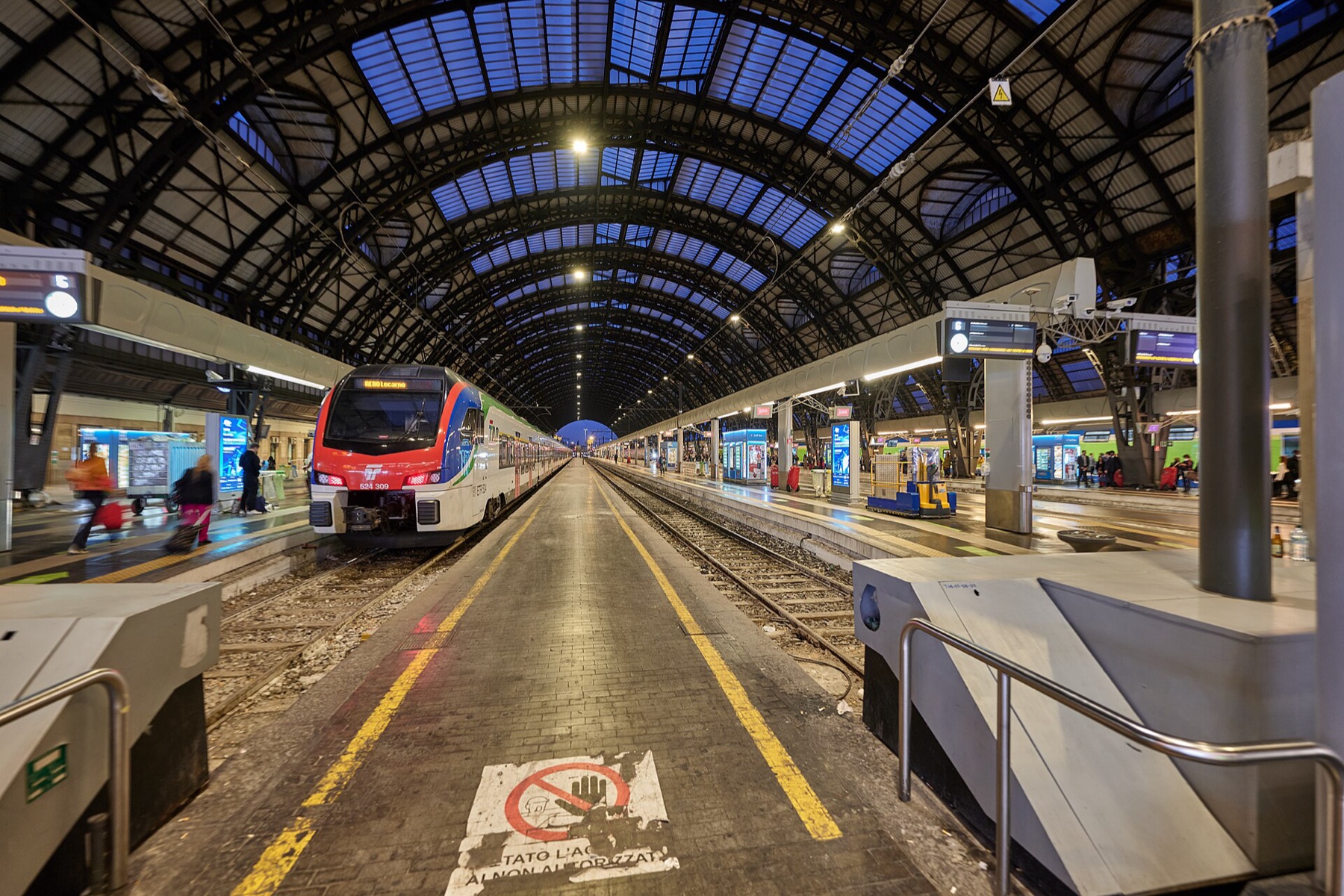
The short answer: plan three nights for a big city, two for a compact one, and avoid single nights. Every move between cities costs about half a day, even when it's a short train ride, so count your real sightseeing days before you add a stop. As a rough guide, 7 days fits one or two cities, 10 days fits two or three, and 14 days fits three, or four if one is a short hop. Fewer cities almost always means more trip.
This goes deeper on one question from our guide to making a travel itinerary. If it's your first time, see also how to plan a first trip to Europe.
What are the rules of thumb for how long to stay in a city?
Short answer: think in nights, not days, and work out how many full days those nights really give you.
- Nights minus one equals full days. Three nights gives you two full days plus two partial ones. That's the math most itineraries ignore.
- Avoid "one-night stands". That's Rick Steves's phrase. With check-in around 3 or 4pm and check-out around 11am or noon, one night rarely leaves a full day of sightseeing.
- Three nights for a major city, and four or five is better. That's Price of Travel's long-standing rule for places like London, Paris, Rome, Madrid and Barcelona.
- Two nights for a compact city. The same guide suggests this for walkable centers like Edinburgh, Nice, Copenhagen, Krakow and Naples.
- Count anchors. List what you'd be sad to miss, and allow one per half day. Six anchors is three full days, which means four nights.
- Add slack. Steves suggests one slack day a week for strikes, delays and the afternoon you just want to sit down.
- Make your first stop a longer one. The CDC's Yellow Book puts adaptation at about 1 hour per day flying east and 1.5 hours flying west. New York to Paris is six hours ahead, so you won't be at your sharpest in the first few days. A two-night first stop means spending most of a city half asleep.
Why do travel days count as lost days?
Short answer: because the time on the train is the smallest part of the move. Packing, check-out, getting to the station, arriving early, finding the hotel and waiting for check-in all come out of the same day.
| Move | Time on the vehicle | What it usually costs |
|---|---|---|
| Kyoto to Osaka | About 15 minutes by Shinkansen | A morning |
| Rome to Florence | About 1 hour 40 minutes by fast train | Half a day |
| Florence to Venice | About 2 hours 15 minutes by fast train | Half a day |
| Tokyo to Kyoto | About 2 hours 15 minutes on a Nozomi | Half a day |
| London to Paris | About 2.5 hours, and Eurostar suggests arriving 75 minutes early at St Pancras | Half a day or more |
| Lisbon to Porto | About 2 hours 40 minutes by train | Half a day or more |
| Madrid to Barcelona | About 3 hours by train | Half a day or more |
| Paris to Amsterdam | About 3.5 hours by train | Most of a day |
| Rome to Paris | About 2 hours 10 minutes in the air, about 5 hours 10 minutes with transfers, per Rome2rio, and that's before airport waiting | A full day in practice |
The last row is the trap. A two-hour flight looks shorter than a three-hour train on paper and takes far more of your day.
Here's what that does to a real trip. Take 10 days on the ground and 9 nights. With two cities, you make one move and each city gets four or five nights. With four cities, you make three moves and each city gets about two nights, which is one full day apiece. You've lost one more day in transit, and you've traded depth everywhere for a photo in each place. Price of Travel suggests about three travel days a week as a limit, or five in two weeks. Treat that as a ceiling, not a target.
How many nights does each city need?
Short answer: it depends on the city's size and what you're going for. These are our suggestions for a first visit, built from the rules above and each city's actual closing days.
| City | Nights | Why | Stay longer if |
|---|---|---|---|
| London | 4 to 5 | Spread out, and most big museums are free, so you can drop in rather than give up a whole day | Theatre or day trips matter to you |
| Paris | 4 to 5 | The Louvre closes on Tuesdays and Versailles on Mondays, and Versailles can fill a whole day | Museums are the main reason you're going |
| Rome | 4 | The Vatican Museums close on Sundays except the last of the month. Steves suggests four or five days rather than a full week | Ancient history is your thing |
| Florence | 2 to 3 | Compact. The Uffizi closes on Mondays, so check your days | You love Renaissance art or want Tuscan day trips |
| Venice | 2 | The evening after day visitors leave is the point. Overnight guests were exempt from the 2026 day-visitor fee | You want the lagoon islands |
| Barcelona | 3 to 4 | Enough for the Gaudí sites and the rest of the city | You want beach time |
| Madrid | 3 | Art and late dinners. The Reina Sofía closes on Tuesdays | You're adding a day trip to Toledo |
| Lisbon | 3 to 4 | Hills slow you down, and Belém takes a half day. Jerónimos Monastery closes on Mondays | You're adding Sintra, under an hour by train |
| Amsterdam | 2 to 3 | Compact. Anne Frank House tickets are online only, released on Tuesdays for six weeks later | Art museums are your priority |
| Tokyo | 4 to 5 | A city of districts, each worth its own day | You want Nikko or Kamakura too |
| Kyoto | 3 to 4 | Temples are spread across the city, and getting around takes longer than it looks | You're adding Nara, about 35 minutes by limited express |
| Osaka | 1 to 2 | About 15 minutes from Kyoto by Shinkansen, so it can even be a day trip | Eating is the reason you're there |
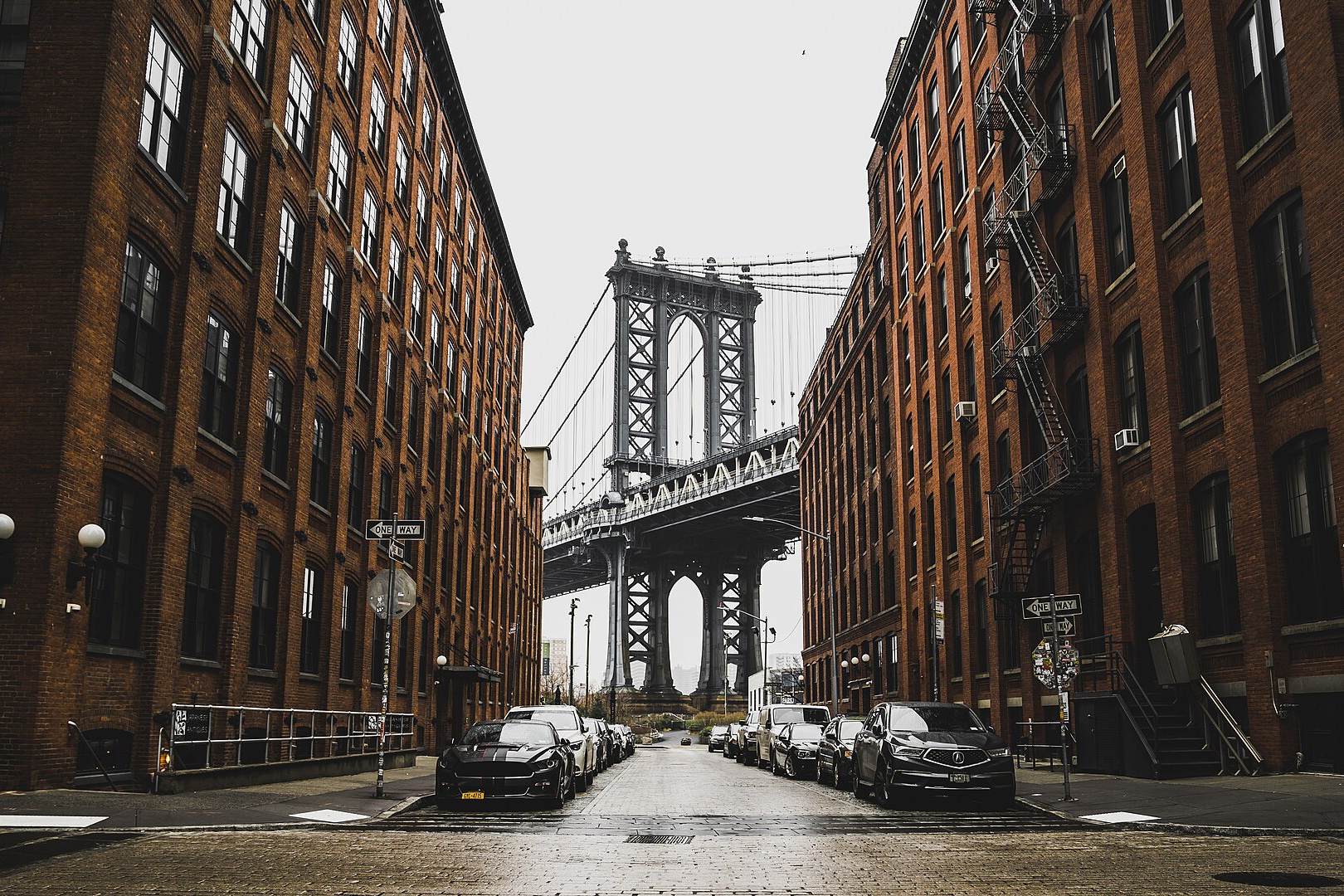
| New York | 4 to 5 | Four days gives uptown, downtown, Brooklyn and Midtown a day each | You want more of Brooklyn |
| Mexico City | 4 | Most big museums close on Mondays, and Teotihuacán takes most of a day | You want more markets and neighborhoods |
What do other visitors actually do? For Italy, figures from the national statistics institute ISTAT, as reported for 2024, put the average stay at 4.2 nights in Rome and 2.3 nights in both Venice and Florence. So for those cities, the numbers above aren't unusually slow. They're close to the norm.
What do good 7, 10 and 14 day splits look like?
Short answer: one move per week is comfortable, and two is fine if the trains are short. These count days from landing, so 7 days means 6 nights on the ground.
7 days (6 nights)
- Paris 6. One hotel, with Versailles as a day trip. If you love a city, this is what going slow looks like.
- Rome 4, Florence 2. One move, about 1 hour 40 minutes by train.
- Tokyo 3, Kyoto 3. One move. It's tight for a first trip to Japan, but it works if you keep each day to one area.
10 days (9 nights)
- London 4, Paris 5. One move by Eurostar.
- Rome 4, Florence 3, Venice 2. Two short train rides. Fly home from Venice so you don't have to backtrack.
- Tokyo 4, Hakone 1, Kyoto 3, Osaka 1. A full route, and our 10-day Japan itinerary has every leg. The single nights work here because the hops are short, and Hakone is a hot spring stop rather than a city to explore.
14 days (13 nights)
- London 5, Paris 5, Amsterdam 3. Two moves, both by train.
- Lisbon 4, Madrid 4, Barcelona 5. One flight, one train.
- Tokyo 6, Kyoto 5, Osaka 2. Two moves, with room for day trips like Kamakura from Tokyo and Nara from Kyoto.
Notice what isn't on the list: Paris, Rome and Barcelona in 7 days. Each of those moves is a flight like the Rome to Paris row in the table above.
When should you break these rules?
Short answer: when a place is small enough, close enough or simply not worth a hotel change.
- One night can work for a very compact place you've planned around. Price of Travel gives Venice as the example: arrive early, stay central, rest when the crowds peak, go back out in the evening.
- Use a day trip instead of a base for places within about 90 minutes of a bigger city. Think Pisa from Florence, Sintra from Lisbon or Nara from Kyoto. You see the place without packing a bag.
- Add a night after a very long journey. Price of Travel suggests this after a flight or train ride of about 12 hours or more, because that day is largely gone.
- Cut any city you can't give a reason for. If the honest answer is "it's on the way", leave it out. A second visit is a better plan than a rushed first one.
- Go slower with a group. More people means slower mornings and more meals to book. Add a night rather than a city.
How do you decide what to cut?
Short answer: count what you actually want to do, city by city.
Put everything you've saved into one list per city, group it by neighborhood and count the anchors. If a city has four anchors and you've given it five nights, you can borrow a night for somewhere else. If it has twelve, either add nights or drop another city. If your saved places are on Otta, the day-by-day plan shows a map for each day, which makes an overstuffed day easy to spot.
FAQ
Is two days enough for a city?
For a compact city, yes. For London, Paris, Tokyo or New York, two days is a sample, and you'll spend it choosing what to miss.
How many cities can you visit in two weeks?
Three is comfortable, and four can work if one of the moves is a very short hop. Beyond that, you're spending much of the trip packing.
Should you plan by days or by nights?
Nights. Hotels count nights, and they make the math honest: three nights is two full days plus two partial ones, not three days.
Should the longest stay be first or last?
Usually first, or wherever you land after the biggest time change. You'll be tired, and it's better to be tired somewhere you still have time left.
Is it better to take a day trip or move hotels?
If it's within about 90 minutes each way and you don't need an evening there, take the day trip. If you want the place after the visitors leave, as with Venice, stay the night.
Sources
- Islands, Rick Steves's itinerary tips: https://www.islands.com/2055985/rick-steves-best-tips-europe-travel-itinerary-do-homework/
- Price of Travel, how long to stay in each city: https://www.priceoftravel.com/how-long-to-stay-in-each-city-itinerary-tips-and-tricks
- CDC Yellow Book, jet lag disorder: https://cdc.gov/yellow-book/hcp/travel-air-sea/jet-lag-disorder.html
- Rome2rio, Rome to Florence: https://www.rome2rio.com/s/Rome/Florence
- Rome2rio, Florence to Venice: https://www.rome2rio.com/s/Florence/Venice
- Rome2rio, London to Paris: https://www.rome2rio.com/s/London/Paris
- Rome2rio, Lisbon to Porto: https://www.rome2rio.com/s/Lisbon/Porto
- Rome2rio, Madrid to Barcelona: https://www.rome2rio.com/s/Madrid/Barcelona
- Rome2rio, Paris to Amsterdam: https://www.rome2rio.com/s/Paris/Amsterdam
- Rome2rio, Rome to Paris: https://www.rome2rio.com/s/Rome/Paris
- Rome2rio, Lisbon to Sintra: https://www.rome2rio.com/s/Lisbon/Sintra
- Eurostar, check-in times: https://www.eurostar.com/uk-en/travel-info/your-trip/check-in
- Louvre, hours and admission: https://www.louvre.fr/en/visit/hours-admission
- Palace of Versailles, tickets and hours: https://en.chateauversailles.fr/plan-your-visit/tickets-and-prices
- Vatican Museums, opening days and times: https://www.museivaticani.va/content/museivaticani/en/link-utili.html
- Uffizi, opening hours: https://www.uffizi.it/en/the-uffizi
- The Local Italy, Venice fee calendar for 2026: https://www.thelocal.it/20251209/calendar-when-will-you-need-to-pay-a-fee-to-visit-venice-in-2026
- Museo Reina Sofía, visit: https://www.museoreinasofia.es/en/visit
- Lisbon Tourism, Jerónimos Monastery hours: https://www.lisbontourism.org/jeronimos-monastery/
- Anne Frank House, tickets: https://www.annefrank.org/en/museum/tickets/
- INAH, Museo Nacional de Antropología: https://lugares.inah.gob.mx/en/node/4955
- The Conservative, Italian tourism figures citing ISTAT: https://www.theconservative.online/?p=44355