10-Day Japan Itinerary for First-Timers (2026): Tokyo to Osaka
The short answer: spend 4 nights in Tokyo (one of those days can be a Mount Fuji trip), 1 night in Hakone, 3 nights in Kyoto with Nara on the way out, and 1 to 2 nights in Osaka, then fly home from Kansai International (KIX). Fly into Tokyo and out of Osaka so you never backtrack. On this one-way route, the nationwide JR Pass (¥50,000 for 7 days on the official site, ¥53,000 from overseas agents since October 1, 2026) usually costs more than buying single tickets, so skip it and use an IC card on your phone for everything local.
For the bigger picture (when to go, visas, what to book months ahead), see our guide on how to plan a trip to Japan.
What does a 10-day Japan itinerary look like, day by day?
Short answer: Tokyo for days 1 to 4, Hakone for day 5, Kyoto for days 6 to 8, Nara on day 9 on your way to Osaka, and Osaka on day 10.
| Day | Where you sleep | The plan |
|---|---|---|
| 1 | Tokyo | Land, get your IC card working, early dinner near your hotel |
| 2 | Tokyo | East side: Asakusa, Tsukiji Outer Market, Ginza |
| 3 | Tokyo | West side: Meiji Jingu, Harajuku, Shibuya, Shinjuku at night |
| 4 | Tokyo | Mount Fuji day trip, or a free Tokyo day |
| 5 | Hakone | Romancecar to Hakone, the Hakone loop, a night at a ryokan |
| 6 | Kyoto | Shinkansen from Odawara, afternoon in Higashiyama, dinner in Gion |
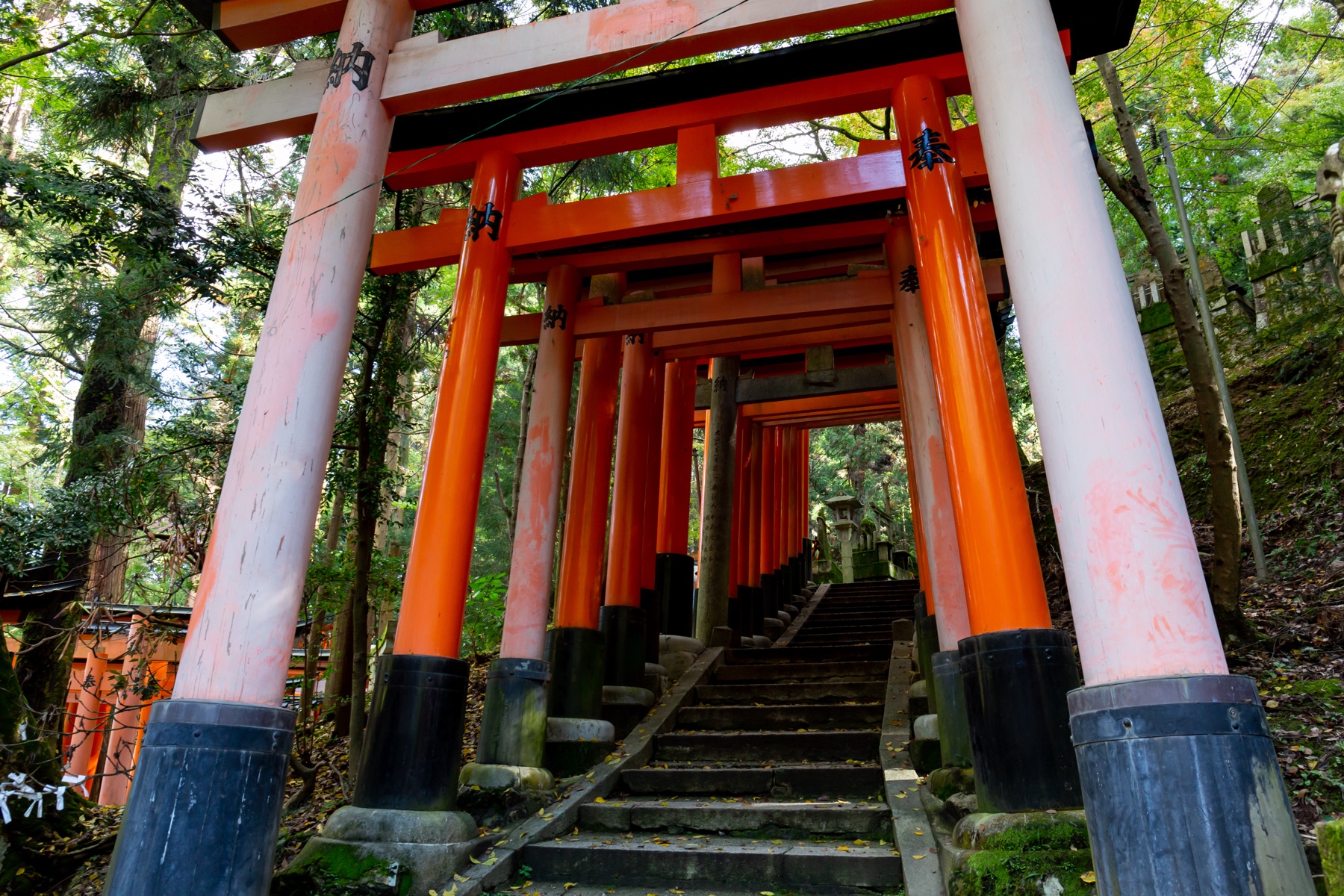
| 7 | Kyoto | Fushimi Inari at dawn, Nishiki Market, Pontocho at night |
| 8 | Kyoto | Arashiyama early, Kinkaku-ji in the afternoon |
| 9 | Osaka | Nara in the morning, train to Osaka, Dotonbori at night |
| 10 | Osaka or home | Kuromon Market, Osaka Castle park, fly out of KIX |
Days 1 to 3: Tokyo
Day 1. If you're flying from the US, treat arrival day as a half day: set up your IC card, walk your hotel's neighborhood, sleep early.
Day 2, east Tokyo. Start at Senso-ji in Asakusa before the crowds arrive, then head to the Tsukiji Outer Market to eat your way through late morning. Spend the afternoon in Ginza.
Day 3, west Tokyo. Meiji Jingu's forest in the morning, Harajuku and Omotesando for lunch and shopping, Shibuya Crossing in the late afternoon, then Shinjuku's small-bar alleys after dark.
For where to eat on days 2 and 3, our Tokyo food guide is sorted by the same neighborhoods.
Day 4: a Mount Fuji day, or a free day in Tokyo
If you want to see Fuji up close, go to Lake Kawaguchi. The highway bus from Shinjuku takes about 1 hour 45 minutes and costs about ¥2,200 one way. The Fuji Excursion limited express runs direct from Shinjuku in about 2 hours, with all seats reserved. The Chureito Pagoda view is the famous photo; in spring 2026 Fujiyoshida canceled its cherry blossom festival there because of overcrowding, so expect lines in peak season.
Fuji often hides behind clouds, so check the forecast the night before. If it looks cloudy, stay in Tokyo instead.
Day 5: Hakone
Short answer: go for one night, not a day trip, and sleep at a ryokan with an onsen.
The Odakyu Romancecar runs from Shinjuku to Hakone-Yumoto in about 80 minutes. Once there, the Hakone Freepass covers the classic loop: the Hakone Tozan Train, the cable car, the Hakone Ropeway over the volcanic steam of Owakudani, and the pirate-ship cruise on Lake Ashi. The Hakone Open-Air Museum, a hillside sculpture park, sits on the Tozan Train line.
On current Odakyu prices, the 2-day Freepass costs ¥7,100 from Shinjuku or ¥6,000 from Odawara, and the Romancecar seat costs ¥1,200 extra. Since you're heading west to Kyoto the next morning, you won't use the Shinjuku version's return leg, so price both before you buy. One heads-up for winter trips: Odakyu has scheduled ropeway maintenance from December 7 to 24, 2026 (Owakudani to Sounzan) and January 12 to February 26, 2027 (Togendai to Owakudani), with replacement buses.
Days 6 to 8: Kyoto
Day 6. Take the Shinkansen from Odawara. Nozomi trains don't stop there, so take a Hikari, which takes about 1 hour 45 minutes to 2 hours to Kyoto. Drop your bags, then walk Higashiyama toward Kiyomizu-dera and come down into Gion for dinner.
Day 7. Fushimi Inari Taisha at dawn, before the tour groups. Late morning at Nishiki Market, an evening walk along Pontocho.
Day 8. Arashiyama's bamboo grove before 9am, then Kinkaku-ji, in the north of the city, in the afternoon.
Our Kyoto guide has restaurants for each of these areas and a four-day version if you want to stay longer.
Days 9 and 10: Nara and Osaka
Day 9. Check out of Kyoto and do Nara on the way. The Kintetsu limited express from Kyoto to Kintetsu-Nara takes about 35 minutes; JR's Miyakoji Rapid takes about 45 minutes but stops at JR Nara, a longer walk from the park. See the deer in Nara Park, Todai-ji's Great Buddha and Kasuga Taisha, then take the Kintetsu line to Osaka-Namba, about 40 minutes. Get to Dotonbori for dinner. If you'd rather not carry bags around Nara, use the station coin lockers or send them ahead (see below).
Day 10. Kuromon Market late morning, Osaka Castle park in the afternoon. The Nankai Rapi:t gets you from Namba to KIX in about 34 to 39 minutes. Our Osaka guide covers what to eat and where.
Where should I base myself in each city?
Short answer: near a big station. You'll leave and come back every day, so a short walk to the trains matters more than the view.
- Tokyo: Shinjuku if you want nightlife and a direct Romancecar to Hakone and buses to Fuji. Tokyo Station or Ginza if you want a calmer base.
- Kyoto: around Kyoto Station for easy Shinkansen and Nara trains, or downtown (Shijo, Kawaramachi) if you'd rather walk to dinner.
- Osaka: Namba, for the food, the Kintetsu line from Nara and the Rapi:t to KIX.
Most hotel front desks can arrange luggage forwarding to your next hotel, booked at least a day ahead, so you can ride the Shinkansen with just a day bag. On the Tokaido Shinkansen, a bag over 160 cm in total dimensions needs a free "seat with an oversized baggage area" reservation, or you pay a ¥1,000 fee on board.
How long does the Shinkansen take between cities?
Short answer: about 2 hours 15 minutes from Tokyo to Kyoto on the Nozomi, and about 15 minutes from Kyoto to Shin-Osaka.
| Route | Train | About how long |
|---|---|---|
| Tokyo to Kyoto | Nozomi | 2 hours 10 to 20 minutes |
| Tokyo to Kyoto | Hikari | About 2 hours 40 minutes |
| Tokyo to Shin-Osaka | Nozomi | 2 hours 21 minutes on the fastest trains, under 2 hours 30 on all |
| Tokyo to Odawara (for Hakone) | Hikari or Kodama | About 30 to 45 minutes |
| Odawara to Kyoto | Hikari | About 1 hour 45 minutes to 2 hours |
| Kyoto to Shin-Osaka | Shinkansen | About 15 minutes |
| Kyoto to Osaka Station | JR Special Rapid | About 28 minutes (no Shinkansen needed) |
A reserved seat from Tokyo to Kyoto on the Nozomi costs ¥13,970 one way on JR's smartEX booking service in regular season (fare table dated April 1, 2025). Station prices run about ¥200 higher, and peak dates cost more. Between Kyoto and Osaka, the local JR train is the better deal.
Is the JR Pass worth it in 2026?
Short answer: not for this itinerary. The pass made sense before October 2023, when the 7-day pass cost ¥29,650. Since then it's ¥50,000, and passes from overseas agents went up again on October 1, 2026, to ¥53,000.
Here are the current prices for an adult, ordinary car:
| Pass | Official JR Pass website | Overseas agents |
|---|---|---|
| 7 days | ¥50,000 | ¥53,000 |
| 14 days | ¥80,000 | ¥84,000 |
| 21 days | ¥100,000 | ¥105,000 |
JR Group says the official site is keeping the old price for a limited time, without saying for how long, so check before you buy.
Now the math for this route. Your only long JR rides are Tokyo (or Odawara) to Kyoto, about ¥14,000, and a few short hops. Hakone's trains are Odakyu, Nara's best line is Kintetsu, and the Rapi:t is Nankai, and the JR Pass covers none of them. All in, the one-way route costs well under half the price of a 7-day pass. Even if you fly home from Tokyo and add a second Kyoto to Tokyo ride, you're still under ¥50,000.
The pass also doesn't cover the Nozomi. Pass holders ride the slower Hikari or pay ¥4,960 per ride for a special Nozomi ticket between Tokyo and Kyoto or Shin-Osaka.
When the pass can pay off: a 7-day stretch with several long rides, like Tokyo to Hiroshima and back, or a Tokyo, Kanazawa, Kyoto loop. Price your real legs first. For Kansai-only regional passes, note that JR West stopped selling the Kansai Area Pass on September 30, 2026; its Kansai Mini Pass and Kansai WIDE Area Pass are still listed.
Do I need an IC card in Japan?
Short answer: yes, it's the easiest way to pay for subways, local trains, buses and convenience stores, and one card works in Tokyo, Kyoto and Osaka.
- On iPhone: add Suica, PASMO or ICOCA directly in Apple Wallet and top up with a card in Wallet. Express Mode lets you tap through gates without unlocking your phone.
- Welcome Suica Mobile: JR East's app for visitors, released in March 2025, sets up a Suica on iPhone before you land.
- Plastic cards: regular Suica and PASMO cards went back on sale in March 2025 after the 2023 chip shortage.
IC cards don't replace Shinkansen or Romancecar seat tickets.
How should I change the plan for cherry blossom or autumn leaves season?
Short answer: book hotels as early as you can, start every day earlier, and move the season-specific spots to the days most likely to be at peak.
Cherry blossoms. In 2026, the Japan Meteorological Agency declared Tokyo's first blooms on March 19 and full bloom on March 28, a few days earlier than average. Kyoto usually peaks around the same week or a few days later. Bloom dates move every year, so wait for the forecasts early in the year before locking in an order. If Tokyo is ahead, flip the route: start in Kyoto and end in Tokyo.
Autumn leaves. Kyoto's color usually peaks from mid-November to early December, with late November the safest bet. Higher ground turns first, so Hakone often colors before Kyoto, which suits this order well. Kyoto's temples are at their busiest in November, so visit Kiyomizu-dera and Arashiyama right at opening.
In both seasons, keep one flexible half day in Kyoto for whichever spot is at peak.
Before you fly, sort every saved reel and friend's tip under the day it belongs to, using the table at the top as the skeleton. Otta can hold those saved spots, your bookings and the day-by-day plan in one trip you share with everyone going.
FAQ
Is 10 days enough for Japan on a first trip? Yes, for Tokyo, Hakone or Fuji, Kyoto, Nara and Osaka at a comfortable pace. It isn't enough to add Hiroshima without cutting a Kyoto or Tokyo day.
Should I fly into Tokyo and out of Osaka? Yes, if you can. An open-jaw ticket into Tokyo (Haneda or Narita) and out of Kansai International saves you a return trip to Tokyo.
Is Hakone or Mount Fuji better for a first trip? Hakone for onsen, a ryokan night and an easy route toward Kyoto. Lake Kawaguchi if the mountain itself is the priority. Both depend on clear weather for the Fuji view.
Can I do Nara as a half day? Yes. Nara Park and Todai-ji fit in a morning, which is why it works on your way from Kyoto to Osaka.
Is Kyoto or Osaka a better base? Kyoto if you want early mornings at the temples, Osaka if food and nightlife matter more. They're about 30 minutes apart on JR, so it's easy to switch.
Sources
- Japan Rail Pass official site, prices and Nozomi rules: https://japanrailpass.net/en/purchase/price/
- JNTO, Japan Rail Pass price increase from October 1, 2026: https://www.japan.travel/en/ca/news/price-increases-are-coming-to-the-nationwide-japan-rail-pass-2026/
- JNTO, 2023 Japan Rail Pass changes: https://www.japan.travel/en/ca/news/changes-are-coming-to-the-japan-rail-pass/
- JR Central, Nozomi tickets for JR Pass holders: https://global.jr-central.co.jp/en/onlinebooking/contents/jrp_nozomi/
- JR Central, oversized baggage rule: https://global.jr-central.co.jp/en/info/oversized-baggage
- JR Central, annual report (Tokyo to Shin-Osaka in 2 hours 21 minutes): https://global.jr-central.co.jp/en/company/ir/annualreport/_pdf/annualreport2025-13.pdf
- smartEX, reserved seat fares: https://smart-ex.jp/en/product/plan/service/
- Kyoto City Tourism, Tokyo to Kyoto travel time: https://global.kyoto.travel/en/faq/detail.php?faq_id=80
- Ekitan, Odawara to Kyoto Shinkansen: https://ekitan.com/en/article/odawara-to-kyoto-shinkansen
- Ekitan, Kyoto to Osaka Shinkansen: https://ekitan.com/en/article/kyoto-to-osaka-shinkansen
- Kyoto Station guide, Kyoto to Osaka trains: https://www.kyotostation.com/traveling-from-kyoto-to-osaka/
- GLTJP, Kyoto to Nara access: https://www.gltjp.com/en/article/item/20942/
- Kansai Airport, train access: https://www.kansai-airport.or.jp/en/access/from-airport/train
- JR West, Kansai Area Pass end of sales: https://www.westjr.co.jp/travel-information/en/tickets-passes/jrwest-rail-pass/kansai/
- Odakyu, Hakone Freepass: https://odakyu-global.com/passes/hakone-freepass/
- Odakyu Hakone, ropeway maintenance notice: https://hakonetrip.odakyu-global.com/news/5949/
- Ekitan, Fuji Excursion: https://ekitan.com/en/article/fujikaiyu
- Highway bus Shinjuku to Kawaguchiko: https://www.kosokubus.com/_en/bus_list/00013/00022/
- DIYPhotography, Chureito Pagoda festival canceled for 2026: https://www.diyphotography.net/wanna-shoot-japans-cherry-blossoms-in-2026-well-chureito-pagoda-festival-just-got-canceled-due-to-overtourism/
- JNTO, luggage forwarding: https://www.japan.travel/en/plan/getting-around/luggage-storage/
- Apple Support, transit cards in Apple Wallet in Japan: https://support.apple.com/en-us/108772
- Tokyo Cheapo, return of Suica cards: https://tokyocheapo.com/travel/the-return-of-suica-cards/
- Time Out Tokyo, 2026 cherry blossom season begins: https://www.timeout.com/tokyo/news/its-official-the-2026-cherry-blossom-season-has-now-begun-031926
- Adnkronos, Tokyo full bloom March 28, 2026: https://english.adnkronos.com/2026/03/28/cherry-blossoms-in-full-bloom-in-tokyo/
- Veltra, best places for autumn leaves in Kyoto: https://www.veltra.com/en/travelguide/kyoto/best-places-to-see-autumn-leaves-in-kyoto/