Japan in Winter Without Skiing: What to Do in 2026 and 2027
The short answer: plenty, and much of it is better without skis. Go to Sapporo for the Snow Festival, February 4 to 11, 2027. Go to Nagano for the snow monkeys. Go to Ginzan, Kusatsu or Kinosaki if you'd rather spend the trip in hot water. Go to eastern Hokkaido for drift ice and cranes, and to Tokyo for winter lights under dry, sunny skies. Several of the best winter events now need booking well ahead, so read the dates first.
What's on in Japan in winter 2026 to 2027?
Short answer: events run from November to March, and February is the busiest month.
| Event | Where | Dates | Book ahead? |
|---|---|---|---|
| Nabana no Sato lights | Mie, near Nagoya | Oct 17, 2026 to May 31, 2027 (closed Jan 6 and 7) | Only for Dec 23 to 25 |
| Marunouchi lights | Tokyo | Nov 12, 2026 to Feb 14, 2027 | No, free |
| White Illumination | Sapporo | Nov 20, 2026 to Mar 14, 2027 | No |
| Ginzan Onsen shuttle system | Yamagata | Dec 19, 2026 to Mar 7, 2027 | Yes, for day visitors |
| Snow monsters light-up | Zao, Yamagata | 31 set nights, Dec 26, 2026 to Feb 23, 2027 | No, but check the night |
| Fire Festival | Nozawa Onsen, Nagano | Jan 15, 2027 | Stay in the village |
| Winter light-up | Shirakawa-go, Gifu | Jan 11, 17, 24 and 31, 2027 | Yes, reservation only |
| Kobe Luminarie | Kobe | Jan 29 to Feb 7, 2027 | For the paid area |
| Snow Festival | Sapporo | Feb 4 to 11, 2027 | Hotels, early |
| Snow Light Path | Otaru | Feb 6 to 13, 2027 | No |
| Kamakura snow huts | Yokote, Akita | Feb 12 and 13, 2027 | No |
When is the Sapporo Snow Festival in 2027?
Short answer: Thursday, February 4 to Thursday, February 11, 2027, across three sites. The detailed 2027 program and site hours weren't published when we checked.
- Odori Park. The main event: snow sculptures along a 1.5 km stretch of the park, with the international contest at 11-chome. They're lit from sundown to 10pm, so come twice.
- Susukino. Ice sculptures on the main street of the nightlife district. If you like a drink with your scenery, there's an ice bar too.
- Tsudome. A dome with a giant slide and indoor and outdoor snow activities, out of the center. Go if you have kids.
Otaru's Snow Light Path, along the canal and the old Temiya rail line, overlaps from February 6 to 11, so you can do both from one Sapporo base. Pack for real cold: Sapporo averages a high of 33°F and a low of 21°F in February, with 116 cm of snowfall that month.
How do you see the snow monkeys?
Short answer: at Jigokudani Monkey Park in Nagano, open 9am to 4pm from November to March. December to March is when snow covers the valley.
- Cost: 800 yen, rising in December 2026 to 880 yen for e-tickets and 1,000 yen for paper tickets.
- Getting there: a bus from Nagano Station to the Snow Monkey Park stop takes about 40 minutes and costs 2,000 yen, then you walk 30 to 40 minutes. The trail gets slippery, so wear winter boots. Crampons and walking sticks are for rent at the trailhead.
- Before you go: the monkeys don't come every day, and the park can close for weather. Check its social media that morning.
- Where to stay: Shibu Onsen and Yudanaka Onsen are 5 and 10 minutes away by bus, so you can see the monkeys bathe, then do the same.
Which onsen towns are worth it in winter?
Short answer: Ginzan for the snowy view, Kusatsu for the hot water spectacle, Kinosaki for hopping between bathhouses.
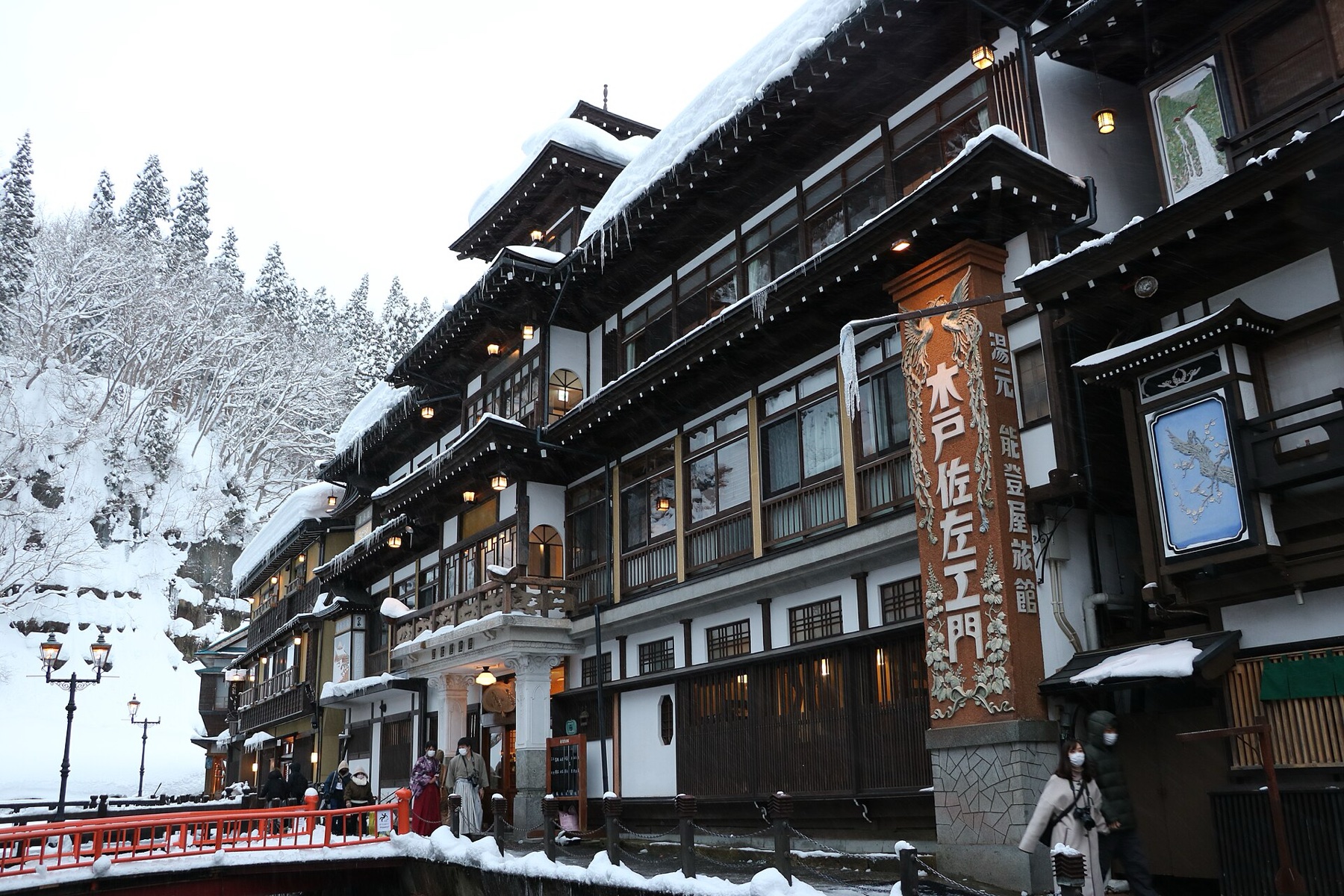
Ginzan Onsen, Yamagata. Tall wooden inns line a narrow river, the snow-country picture many people have in mind. That popularity now comes with rules. From December 19, 2026 to March 7, 2027, day visitors park at Taisho Roman-kan and ride a reserved shuttle; walking in from there is banned in winter.
- Advance round trips cost 700 to 1,200 yen, depending on the time, plus a 165 yen booking fee.
- Morning and midday slots went on sale on November 1. Afternoon slots (2pm to 6pm) open by month: January on December 1, and February and March on January 1, all Japan time.
- Evenings are the crunch. The official page cites a past wait of three hours.
- If you can, stay overnight, and ask your inn how access works.
Kusatsu Onsen, Gunma. The town is built around the Yubatake, a free, always-open field of steaming wooden channels that cools the spring water. Watch the yumomi show at Netsunoyu, where performers stir the water with long paddles (reported at 600 yen, tickets on sale 30 minutes before each show). Highway buses from Shinjuku take about 3.5 to 4 hours.
Kinosaki Onsen, Hyogo. If you want to walk between baths in a yukata, this is your town. It's about 2.5 hours from Kyoto and 2 hours 40 minutes from Osaka by limited express.
- A day pass costs 1,500 yen, and inn guests usually get a pass at check-in.
- All the public bathhouses allow tattoos, which is rare in Japan.
- There are officially seven baths, but Satono-yu has been closed for renovation since April 2024, so plan on six.
- Crab season runs from November to March, and most inns build dinner around it.
Nozawa Onsen, Nagano. Skiing's the main draw, but the Dosojin Fire Festival on January 15 is a reason to come without skis. It's described as open to residents and guests staying in the village, so book a room early.
What else can you see in Japan in winter?
Short answer: some of the best of it is outdoors and weather-dependent, so build in spare days.
- Shirakawa-go light-up, Gifu. The thatched farmhouses are lit from 5:30pm to 7:30pm on January 11, 17, 24 and 31, 2027, and you can't get in without a reservation. The lodging lottery has closed. A second round of parking opens on December 1 at 1pm Japan time (7,000 yen for one to five people), highway bus tours are sold by their operators, and agency tours are listed from December 2. There's no regular bus back after the event and no taxis that day, so don't improvise.
- Zao snow monsters, Yamagata. Wind and frost coat the fir trees into giant white shapes. The ropeway says they grow in January, peak in February and start collapsing in March. Night light-ups run from 5pm to 9pm on 31 set nights, reported at 4,600 yen. Average temperatures up there are 14°F to 5°F.
- Drift ice, Abashiri, Hokkaido. The Aurora icebreaker lists sailings from January 20 to March 31, one hour, 7,000 yen, cash only. The operator doesn't state a year, so reconfirm for 2027. Ice is most often seen from mid-February to early March, and it isn't guaranteed: it can vanish overnight with the wind.
- Red-crowned cranes, Tsurui, Hokkaido. Nearly 300 cranes visit the Tsurui-Ito Tancho Sanctuary from November to March. Feeding usually happens around 9am and 2pm, and you can watch from the heated Nature Center. If you love wildlife, pair this with Abashiri.
- Yokote Kamakura, Akita. Snow huts of about 3.5 meters across, where local children invite you in for amazake and grilled mochi, on February 12 and 13, 2027, from 6pm to 9pm. The festival moved from its fixed February 15 and 16 dates, so older guides are wrong.
Where can you see winter illuminations in Japan?
Short answer: Tokyo for free city lights close to Christmas, Nabana no Sato for sheer scale, Kobe for meaning.
- Tokyo. Roppongi's Keyakizaka runs November 5 to December 25, 5pm to 10pm. Marunouchi runs November 12 to February 14, from 4pm to 11pm (midnight in December). Tokyo Midtown runs November 26 to December 25, 5pm to 11pm. All free.
- Nabana no Sato, Mie. A roughly 200-meter tunnel of light, about 35 minutes by bus from Nagoya (1,200 yen). Admission is reported at 3,000 yen at convenience stores or 3,200 yen at the gate through February, including a 1,000 yen voucher to use inside.
- Kobe Luminarie. A memorial to the 1995 Great Hanshin-Awaji Earthquake, now held in late January rather than December. The arched corridor at Meriken Park is in a paid area, reported at 500 to 750 yen in advance. Other sites are free.
- Sapporo. The White Illumination is listed from November 20 to March 14, centered on Odori Park. Check which sites are lit on your dates.
What should you eat in Japan in winter?
Short answer: whatever is hot and local. Match the dish to the region.
- Snow crab, Sea of Japan coast. Season opens on November 6 and runs into March. Kinosaki sells it as buns on the street, and in full dinners at inns.
- Fugu, Shimonoseki. Pufferfish is in season from about October to March, served as sashimi (tessa) or hot pot (tecchiri). Restaurants serving it need an official certificate.
- Oysters, Hiroshima. Plumpest from December to February. Try the grill stalls on Miyajima, or kaki dote nabe, a miso oyster hot pot.
- Hot pots. Look for Ishikari nabe (salmon in miso) in Hokkaido.
- Oden. A kombu broth stew of daikon, eggs and fish cakes, sold at izakaya and convenience stores. It's the easy warm-up.
Which region of Japan suits what in winter?
Short answer: snow is heavy in the north and along the Sea of Japan, while the Pacific side is usually dry and sunny. Pick the weather you want first.
| Region | January high / low | Go for |
|---|---|---|
| Hokkaido (Sapporo) | 31°F / 20°F, 137 cm of snow | Snow Festival, drift ice, cranes |
| Tohoku, Nagano and Gunma | Snowy; not measured here | Ginzan, Zao, Yokote, snow monkeys, Kusatsu |
| Sea of Japan coast | Snowy; not measured here | Shirakawa-go, Kinosaki, crab |
| Tokyo | 50°F / 34°F, 193 sun hours | Lights, museums, clear days |
| Kansai (Osaka) | About 48°F / 37°F | Kyoto, Osaka, Kobe Luminarie |
| Okinawa (Naha) | 68°F / 59°F, 93 sun hours | Whale watching from January to March, early cherry blossoms |
New to Japan? Start with how to plan a trip to Japan and our 10-day itinerary, then swap in one of these. If you can wait, here's our 2027 cherry blossom forecast.
FAQ
When is the Sapporo Snow Festival in 2027?
February 4 to 11, 2027, at Odori Park, Tsudome and Susukino, according to Sapporo's official tourism site.
Can you see the snow monkeys all year?
The park is open year-round, but the snow scene is from December to March. Monkeys may visit less often in late October and early November, and they don't appear every day.
Do you need a reservation for Ginzan Onsen?
Day visitors need a shuttle ticket from December 19, 2026 to March 7, 2027. Tickets close at 5pm Japan time the day before, and any spare seats are sold on the day from a machine at Taisho Roman-kan. Bath fees are extra.
Can you use an onsen with tattoos in Japan?
It varies, so ask each bath. In Kinosaki, all the public bathhouses allow tattoos of any size.
Does it snow in Tokyo in winter?
Not much. Heavy snow is mostly a northern and Sea of Japan story, and Tokyo's January is usually sunny and dry, with about 193 hours of sun.
Where is it warm in Japan in winter?
Okinawa. Naha averages highs of about 68°F in January, though it's much cloudier than Tokyo. Humpback whales pass the Kerama Islands from January to March.
Sources
- Sapporo Travel, Snow Festival 2027: https://www.sapporo.travel/en/event/event-list/sapporo_snow_festival/
- Sapporo Travel, Otaru Snow Light Path 2027: https://www.sapporo.travel/en/event/event-list/otaru-snow-light-path/
- Sapporo Travel, White Illumination: https://www.sapporo.travel/en/event/event-list/sapporo_white_illumination/
- Wego, Sapporo Snow Festival 2027: https://blog.wego.com/sapporo-snow-festival/
- Japan Meteorological Agency, Sapporo normals: https://www.data.jma.go.jp/obd/stats/etrn/view/nml_sfc_ym.php?prec_no=14&block_no=47412
- Japan Meteorological Agency, Tokyo normals: https://www.data.jma.go.jp/obd/stats/etrn/view/nml_sfc_ym.php?prec_no=44&block_no=47662
- Japan Meteorological Agency, Naha normals: https://www.data.jma.go.jp/obd/stats/etrn/view/nml_sfc_ym.php?prec_no=91&block_no=47936
- Japan Guide, climate: https://www.japan-guide.com/e/e2273.html
- Japan Guide, Jigokudani Monkey Park: https://www.japan-guide.com/e/e6028.html
- Go Nagano, Snow Monkey Park guide: https://www.go-nagano.net/en/trip-idea/id17978?hsLang=en
- Ginzan Onsen, official winter 2026 page: https://www.ginzanonsen.jp/winter/2026/
- Japan Activity, Kusatsu Yubatake: https://japanactivity.com/kusatsu-onsen-yubatake
- Japan Activity, yumomi show: https://japanactivity.com/yumomi-show-netsunoyu-kusatsu
- Tokyo Cheapo, Kusatsu by bus: https://tokyocheapo.com/travel/holidays/kusatsu-onsen-tokyo-bus/
- Visit Kinosaki, the seven onsen: https://visitkinosaki.com/about-kinosaki/the-7-mystic-onsen/
- Visit Kinosaki, snow crab: https://visitkinosaki.com/trip-ideas/snow-crab-season-in-kinosaki-2/
- Visit Kinosaki, access: https://visitkinosaki.com/travel-professionals/?p=10733
- Nozawa Onsen Fire Festival guide: https://nozawa-onsen.com/nozawa-fire-festival/
- Nozawa Onsen Tourism Association, festivals: https://nozawakanko.jp/en/festivals
- Shirakawa-go Tourist Association, 2027 light-up overview: https://shirakawa-go.gr.jp/en/events/142/
- Shirakawa-go Tourist Association, 2027 schedule: https://shirakawa-go.gr.jp/en/events/140/
- Hidden Japan Gems, Zao snow monsters (citing the ropeway's flyer): https://hiddenjapan-gems.com/zao-snow-monsters/
- Aurora icebreaker, official site: https://www.ms-aurora.com/abashiri/en/
- Visit Abashiri, Q&A: https://visit-abashiri.jp/en/about/qa.html
- Visit Hokkaido, where to see cranes: https://www.visit-hokkaido.jp/en/feature/tancho
- WaTabi, Yokote Kamakura: https://watabi.org/articles/yokote-kamakura-guide
- WaTabi, Tokyo winter illuminations: https://watabi.org/en/articles/tokyo-winter-illumination-guide
- Nagashima Resort, Nabana no Sato official: https://www.nagashima-onsen.co.jp/nabana/illumination/index.html
- WaTabi, Nabana no Sato: https://watabi.org/en/articles/nabana-no-sato-illumination-guide
- WaTabi, Kobe Luminarie: https://watabi.org/en/articles/kobe-luminarie-guide
- WaTabi, Japan winter food: https://watabi.org/en/articles/japan-winter-food-guide
- Japan Experience, winter specialties: https://japan-experience.com/prepare-trip/know/japanese-gastronomy/japanese-winter-culinary-specialties
- JNTO, whale watching in the Kerama Islands: https://www.japan.travel/en/sports/adventure/activities/whale-watching-in-the-kerama-islands/
- WaTabi, Okinawa winter escape: https://watabi.org/en/articles/okinawa-winter-escape-guide
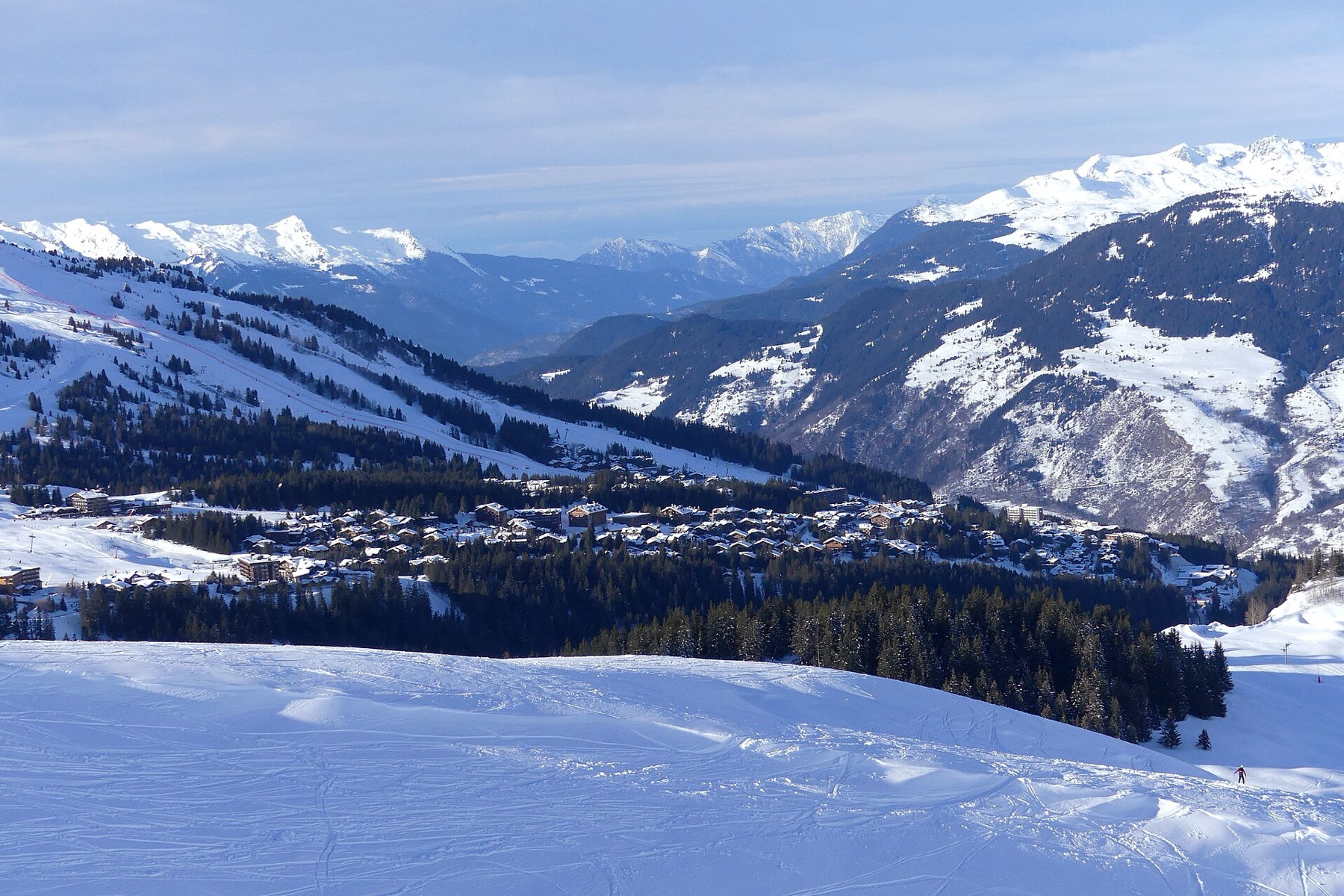
Cover photo: さかおり, CC BY-SA 4.0, via Wikimedia Commons.